Finding a safe, engaging first bike for a little boy can boost early walking, balance, and confidence. The following picks focus on pedal-free balance bikes and beginner trikes designed for ages 12-36 months. Each option emphasizes stability, age-appropriate steering, and comfortable seats to help tots explore riding indoors or outdoors. Below, a quick summary table highlights key features to compare at a glance.
| Product | Age Range | Key Benefit | Notable Feature |
|---|---|---|---|
| SEREED Baby Balance Bike | 12-24 months | Early balance & confidence | 135° turning limit, aluminum frame |
| Umatoll Colorful Lighting Balance Bike | 12-24 months | Eye-catching lights for motivation | Glow rear wheel, 3-seat positions |
| Colorful Lighting Balance Bike (No Pedal) | 10-36 months | Fun and safety-first design | Colorful rear wheel lighting |
| besrey 5 in 1 Toddler Bike | 1-4 years | Versatile riding modes | Removable pedals, curved steel frame |
| newyoo Tricycles 5-in-1 | 1-3 years | Multi-mode growth option | Push handle, adjustable components |
SEREED Baby Balance Bike For Toddlers

The SEREED balance bike is designed for infants aged 12 to 24 months, focusing on building early balance, steering, and confidence. With a no-pedal profile and a widened wheelbase, it reduces the risk of feet getting clamped and helps toddlers learn to balance before they transition to a pedal bike. The 135° turning limit and gravity steering keep riding intuitive while keeping the child close to the ground for safety. A sturdy aluminum alloy frame, non-slip TPU handle, and a softly cushioned seat offer a comfortable, durable ride for both indoor and outdoor use. This option is suitable for family playtime or cozy living room sessions. In practice, families report smoother transitions to traditional bikes after mastering balance with this device.
What sets this model apart is its emphasis on safety without sacrificing balance development. The fully enclosed wheels protect little feet from pinch points, and the low center of gravity aids stability. The lightweight frame makes it easy for parents to lift the bike during breaks or carry it along while running errands. For caregivers seeking a first-bike experience that prioritizes safety and core balance skills, this option offers a practical balance between security and skill-building.
Umatoll Colorful Lighting Balance Bike Toys

The Umatoll balance bike blends safety with engaging lighting to boost curiosity in children aged 12-24 months. The glow rear wheel is activated by motion and requires no batteries, offering a simple, maintenance-free light show that can spark joyful exploration. A 135° steering limiter helps prevent rollover while ensuring easy, kid-friendly direction control. Fully enclosed wheels protect tender toes, and a TPU handlebar grip enhances secure handling for little hands. The seat is adjustable in three positions, accommodating growing toddlers and helping parents tailor the bike to the child’s height and comfort.
This model stands out for its emphasis on sensory engagement through light, which can encourage longer riding sessions and more practice with balance and coordination. The combination of safety features, adjustable seating, and no-pedal design makes it suitable as a transition tool between walking and independent riding. If you want a balance-focused ride with extra visual appeal, this option provides a practical, durable choice for everyday use and playtime adventures.
Colorful Lighting No-Pedal Balance Bike

This no-pedal balance bike emphasizes color and motion as a learning tool for children aged 10-36 months. The wheel lighting system requires no batteries—spin the wheels to glow, providing immediate feedback as balance improves. The design minimizes the risk of tipping with a 135° steering limit, while the enclosed wheels reduce the chance of pinch injuries. The lightweight frame supports effortless handling by caregivers, and the product is designed to help children practice balance, steering, and coordination, all while building self-confidence during the early steps of independence.
Parents seeking a visually engaging option that encourages frequent practice will appreciate the built-in lighting feature and straightforward setup. The bike emphasizes safety and simplicity, making it a reliable choice for daily use in living rooms or playgrounds. Although the lighting is a fun bonus, the core benefit lies in the stable, pedal-free ride that fosters essential motor skills without overwhelming the child.
besrey 5 in 1 Toddler Bike

The besrey 5 in 1 Toddler Bike offers a versatile growth path from infancy through early childhood with a single product. The adjustable frame supports a wider age range, making it a practical long-term investment. Its curved carbon steel frame design aims to absorb shocks and reduce injury risk, while a no-edges approach minimizes potential harm during rides. The setup is described as straightforward, and the bike supports quick transitions between modes as your child’s abilities develop. The pedal-removal capability allows easy switch to a balance mode, progressively supporting riding confidence without adding complexity for caregivers during assembly or switching modes.
With 5-in-1 versatility, this option targets families seeking a multi-use vehicle that adapts as a child grows. The emphasis on safety features—such as rounded edges and a stable frame—aligns with a cautious approach to early mobility. While assembly and mode-switching may require a brief setup, the payoff is a single product that accommodates children across several developmental stages, potentially reducing the need for multiple toys or bikes over a few years.
newyoo Tricycles 5-in-1
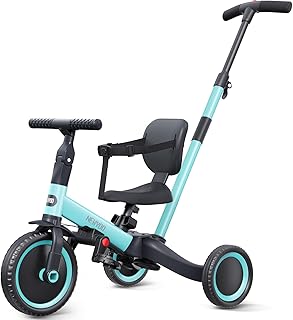
The newyoo 5-in-1 tricycle provides a range of modes to support a child from about 12 months to 3 years. Five modes—Push Tricycle, Push Balance Bike, Tricycle, Balance Bike, and Bike—allow a gradual progression from assisted to independent riding. A 135-degree steering limit helps control speed and direction while a parent push handle enables guardians to guide young riders as needed. The adjustable handlebar, seat, and pedals facilitate a comfortable fit for different heights and ages, and the pedal positions can be changed as the vehicle transitions to different modes. This flexibility makes it a practical long-term ride-on option for families prioritizing a scalable learning curve.
Buying Guide: Key Purchase Considerations
- Age and growth trajectory: Choose a product that matches your child’s current age with enough headroom for growth. Some models offer adjustable seats or multi-mode configurations to accompany development.
- Safety features: Look for a low center of gravity, enclosed wheels, and steering limits (ideally around 135°) to minimize tipping and foot injuries. Non-slip handles and soft seating add comfort and control.
- Pedal design: For beginners, pedal-free balance bikes encourage balance practice without the complexity of pedaling. Some products switch to “pedal mode” later, which can simplify progression to a traditional bicycle.
- Materials and durability: Aluminum frames are lightweight yet sturdy, while steel frames offer strength for rough play. Consider wheel material and grippiness for various floor types and outdoor surfaces.
- Adjustability: Seats, handlebars, and pedal configurations should be adjustable to accommodate a growing child and changing riding modes.
- Indoor versus outdoor use: If space is limited, look for bikes with compact dimensions or a safety plan for indoor use. Outdoor-friendly models should handle uneven surfaces and provide weather resistance.
- Maintenance: Simpler designs with fewer moving parts generally require less upkeep. Look for easy assembly and clear instructions for longevity.
- Value versus longevity: Multi-mode or 5-in-1 models can offer more long-term value, as they adapt with a child’s development and reduce the need to buy multiple toys over a few years.
When selecting the best first ride-on for a baby boy, balance, safety, and growth potential should guide the choice. The listed models each emphasize balance practice, safe handling, and kid-friendly design while offering different aesthetic and feature-driven options. Consider your space, routine, and how your child responds to playful light or bright colors, then match those preferences with a model that supports steady skill-building and confidence on two wheels—before they’re ready for a traditional bike.