Choosing a toddler-friendly ride helps little ones learn balance, pedaling, and coordination while parents enjoy peace of mind. The following options cover tricycles and balance bikes designed for ages 1 to 5, with features like adjustable seats, parent push handles, and sturdy wheels. This guide highlights five highly-rated choices and provides practical buying tips to help you pick a model that suits your child’s growth and your family’s needs.
| Product | Age Range | Key Benefit |
|---|---|---|
| newyoo TR007 Tricycle | 1-3 years | Five modes for progression |
| Umatoll Tricycle | 2-5 years | Three-position seat adjustment |
| SEREED Tricycle | 2-5 years | Lightweight with quick assembly |
| KRIDDO Balance Bike | 2-5 years | Customizable plate and safety features |
| KRIDDO Tricycle | 24-48 months | Extended rear wheels for stability |
Note: All selections below are chosen for versatility, stability, and age-appropriate learning progression. Each section includes a direct link to the product page for quick reference.
Newyoo Tricycle With Parent Push Handle

The Newyoo TR007 tricycle offers 5 modes: Push Tricycle, Push Balance Bike, Tricycle, Balance Bike, and Bike modes. This flexibility supports children aged 1 to 3 as they grow. A 135-degree rotating steering handlebar helps parents guide speed and direction, reducing falls and injuries. The handlebar, seat, and pedals are adjustable with a simple red button, accommodating different heights and pedal positions as kids transition through modes.
Umatoll Tricycle With Adjustable Seat
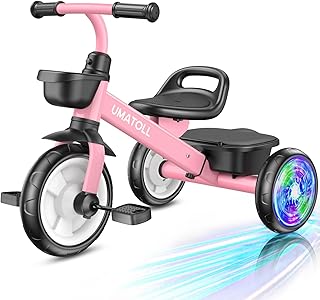
The Umatoll tricycle is built for durability and growth, featuring carbon steel construction with spring buckles and reinforced screws. It provides a stable ride thanks to extended rear wheels and a wide wheelbase that reduces tipping risk. A three-position adjustable seat allows the trike to grow with your child from age 2 to 5, aligning with their increasing pedaling and steering abilities.
SEREED Colorful Lighting Tricycle

The SEREED tricycle combines quick assembly with a lightweight frame and bright, engaging features. It emphasizes a smooth ride through precision bearings and a thoughtful pedal design. Weighing about 6.6 pounds, it is easy to maneuver for toddlers and caregivers alike, while remaining sturdy enough for everyday use and colorful enough to captivate a young rider.
KRIDDO Balance Bike For Early Riding

The KRIDDO Balance Bike introduces early riding through a simple push-and-balance approach. It includes a removable customizable plate with sticker options for personalization. Safety features include soft rubber grip handlebars and a soft PU seat on a sturdy carbon-steel frame capable of supporting up to 110 lbs. This bike supports ages 2 to 5 while emphasizing balance and basic steering skills before pedaling.
KRIDDO Tricycle With Extended Rear Wheels

The KRIDDO Tricycle is designed for 24 to 48 months, helping toddlers explore the world while developing steering skills and coordination. Its extended rear wheels and wider wheelbase reduce tipping, providing stability as little riders learn to ride. The seat and grip design prioritize comfort and support, making it a practical choice for early riders.
Buying Guide: Key Purchase Considerations
- Age range and growth: Choose a model with adjustable seats, handlebars, and pedals to accommodate rapid toddler growth from ages 1 to 5.
- Safety features: Look for wide wheelbases, low centers of gravity, secure seat belts or harnesses, and easily adjustable push handles for parent supervision.
- Stability versus progression: Tricycles offer stability for beginners; balance bikes promote early steering and balance. Consider a model that transitions through modes as your child grows.
- Weight and portability: Lighter frames are easier for parents to move and store, especially if you need to transport between locations.
- Materials and durability: Steel frames with reinforced joints withstand repeated use. Check for smooth edges and non-slip grips to reduce injury risk.
- Maintenance: Favor bikes with simple assembly and easily replaceable parts, such as pedals and tires, to extend the life of the product.
- Storage and space: If you have limited space, consider foldable or compact designs that still offer progression through modes.
- Color and design: While not a safety feature, appealing colors and design can encourage kids to use the bike more consistently.
These considerations help compare products across stability, growth potential, and user-friendliness, ensuring a suitable choice for a 2-year-old learning to ride while accommodating family needs for supervision and long-term value.