Balance bikes are a great way for four-year-olds to learn balance, steering, and coordination before moving to pedal bikes. This guide highlights five top-rated options designed for kids about age four, featuring lightweight frames, adjustable seating, and reliable tires for diverse surfaces. Each entry summarizes what sets the bike apart and how it benefits early riders, so you can compare quickly and choose the best fit for your child.
| Product | Brand | Why It Stands Out |
|---|---|---|
| Ridego 14 Inch Balance Bike | Ridego | Lightweight, adjustable seat, all-terrain air tires |
| KRIDDO Toddler Balance Bike | KRIDDO | Customizable plate, sturdy steel frame, safe design |
| SEREED Toddler Balance Bike | SEREED | Tool-free adjustments, grow-with-kid features |
| Bicystar 14 Inch Balance Bike | bicystar | Inflatable tires, tall height range, safety-focused |
| Bobike Toddler Balance Bike | Bobike | Adjustable seat/handlebar, easy assembly |
Ridego 14 Inch Balance Bike For Kids

The Ridego 14 Inch Balance Bike is designed for children aged 3 to 6, offering a natural transition from a stroller to a pedal bike. By focusing on balance rather than pedaling, it helps kids gain confidence quickly as they master steering and weight shifting. Weighing just over 8 pounds, the frame uses a glass-reinforced nylon construction that delivers strength comparable to carbon steel while remaining highly manageable for parents to carry. The bike supports riders up to 110 pounds, ensuring it can grow with your child through several years of use.
All-terrain capability is a key feature, thanks to air-filled rubber tires that absorb shocks on grass, gravel, or pavement. The deep anti-slip tread improves grip in varied weather conditions, allowing kids to explore sidewalks and trails with a stable ride. The combination of a lightweight frame and strong tires helps maintain balance during quick starts and stops, which is essential for early riders.
Parents appreciate the low-maintenance design of Ridego’s balance bike. There are no pedals to complicate learning, and the lack of training wheels reduces the risk of over-reliance on stability aids. The seat is adjustable to accommodate growing legs, and the bike’s simple geometry keeps the center of gravity within easy reach for most four-year-olds. This balance-first approach supports a smooth progression to traditional bikes later on.
KRIDDO Toddler Balance Bike
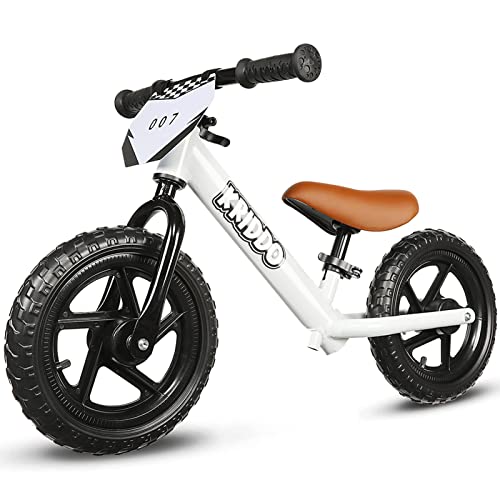
KRIDDO’s balance bike is built for early learners ages 2 to 5, with a focus on safety and personalization. The bike features a wide, sturdy carbon-steel frame rated to handle up to 110 pounds and a soft PU seat with cushioned grips that reduce fatigue during longer rides. A standout element is the removable customizable plate, inviting kids to decorate their bike with stickers or drawings, which can boost enthusiasm for riding and ownership of their equipment.
Setup is straightforward, and the bike includes a soft-grip handlebar design that promotes secure control for new riders. The combination of a strong frame and a forgiving seat height helps children feel confident when pushing off and balancing, which are critical steps in transitioning to a pedal bike. The KRIDDO model emphasizes durability and personal expression, making it a compelling choice for families looking for long-term value.
Safety remains a priority with this model: the sturdy construction, balanced weight distribution, and robust grips help minimize slips and accidental falls. The design is tailored to fit a range of indoor and outdoor environments, from park paths to backyard play spaces, supporting steady progression through the learning process.
SEREED Toddler Balance Bike

The SEREED balance bike targets riders aged 2 to 5 with a focus on adjustability and growth. It uses a wide carbon-steel frame rated to support up to 110 pounds and includes a 12.6-inch starting seat height, enabling smaller children to reach the ground with ease for stable balancing. The quick-adjust mechanism allows both seat height (12.6–17.1 inches) and handlebar height (19.6–22.5 inches) to be altered without tools, making it easy to tailor the ride as your child grows.
Parents may appreciate the two-tone color options and the soft saddle and rubber grips that contribute to a comfortable ride. Because the bike operates without pedals, children can focus on balance, steering, and momentum control—skills that translate well to later pedal-bike riding. The included customization plate and stickers offer a creative outlet that may increase interest in practice sessions.
Build quality and safety features align with mid-range expectations: a sturdy steel frame, protective footrest, and reliable stability during first attempts at gliding. The design targets a smooth learning curve, enabling young riders to gain confidence before introducing pedals or more advanced riding techniques.
Ridego 14 Inch Balance Bike – Alternative Pick
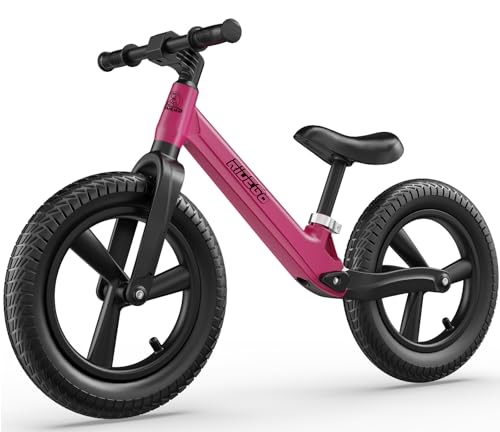
This Ridego 14 Inch model mirrors the key strengths found in the primary Ridego option, designed for ages 3 to 6. The same lightweight construction, all-terrain air tires, and adjustable seating are highlighted features that accommodate growing kids. The weight-to-strength ratio remains favorable, supporting effortless handling by parents and a stable, confident ride for children as they learn to balance and steer without pedaling.
With the same emphasis on balance-first progression, this version underscores Ridego’s commitment to value and durability. The air-filled tires deliver superior grip across different surfaces, while the corrosion-resistant frame helps extend the bike’s lifespan through various weather conditions. The design supports moderate growth spurts and provides a gentle introduction to independent riding experiences.
Parents can expect predictable, safe learning sessions with this model, as its geometry helps minimize tipping and encourages steady momentum. The combination of manageability and reliable performance makes it a solid complement to an entry-level balance bike collection for four-year-olds.
Bicystar 14 Inch Balance Bike
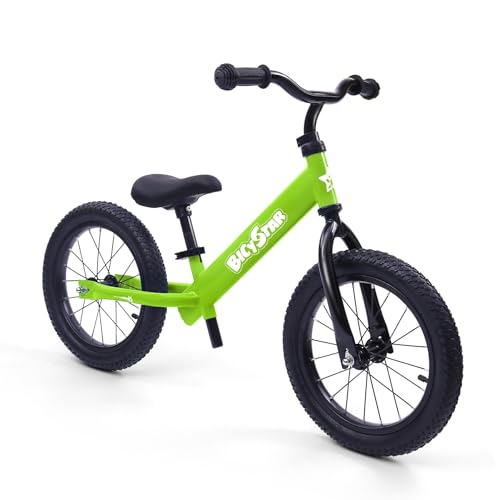
The Bicystar 14 Inch Balance Bike is designed to grow with kids from about age four, offering seat adjustments from 13 inches to 21 inches and a handlebar height that expands to roughly 21.6 to 24 inches. This broad range helps accommodate different inseams and torso lengths, which is especially beneficial when a child is in the middle of a growth spurt. Inflatable air tires provide a stable ride, delivering grip on varied surfaces while maintaining a smoother experience indoors and outdoors.
Safety and comfort form a core focus: the bike uses a wide carbon steel frame rated to support up to 110 pounds, combined with soft grips and a padded seat. A steady, coasting footrest helps keep little feet safe while learning to balance. The design supports easy mounting and dismounting, reducing learning friction and encouraging longer practice sessions that reinforce balance and control before pedaling is introduced.
In practice, this model offers a dependable balance-learning platform with durable construction and a comfortable ride. It accommodates different learning speeds and comfort levels, making it a practical choice for families seeking a versatile, kid-friendly balance bike for four-year-olds.
Bobike Toddler Balance Bike

Bobike offers a kid-friendly balance bike designed for ages 2 to 5 with adjustable seat and handlebar features, enabling a natural growth path as your child ages. The bike’s carbon steel build emphasizes sturdiness, ensuring it can withstand the typical bumps and tumbles associated with early riding. Easy assembly and a straightforward setup process make it appealing for households that want a quick, ready-to-ride solution.
The bike’s design emphasizes early balance and coordination skills with a stable ride. The adjustable components allow parents to tailor the fit to their child’s current size and comfort level, supporting a smooth transition to pedal biking when the time comes. The combination of adjustability and durable construction provides long-term usability as children grow taller and more capable on two wheels.
For families prioritizing a trusted brand and simple, effective design, Bobike delivers a practical option that aligns with the goals of early biking education and ongoing enjoyment on outdoor adventures.
Buying Guide: Key Purchase Considerations For 4-Year-Old Balance Bikes
- Age and height compatibility: Look for adjustable seat heights and handlebar positions to accommodate growth from age four through early elementary years. Many bikes offer a broad range that fits inseams around 14–22 inches.
- Weight and materials: Lighter bikes are easier for young children to manage. Materials like reinforced nylon frames or steel frames with lightweight designs help kids push off and glide without fatigue.
- Wheels and tires: Air-filled tires provide better shock absorption and traction on uneven surfaces. Ensure tires are not overly wide, to prevent stability issues for beginners, but still offer a stable grip on pavement, grass, and gravel.
- Safety features: Soft grips, a padded seat, wide footrests, and a low center of gravity improve learning safety. Avoid bikes with sharp edges or small parts that could pose hazards to a curious child.
- Maintenance and durability: Choose models with corrosion-resistant frames and straightforward assembly. Quick-adjust mechanisms without tools are a plus for busy parents adjusting fit between rides.
- Personalization options: Some bikes include decals or plates for customization—these can enhance a child’s connection to their bike and encourage frequent practice.
- Learning trajectory: Balance bikes focus on gliding, steering, and balance first. A bike that emphasizes these skills before pedaling helps ensure a smoother transition to a pedal bike later on.
- Surface adaptability: Consider where your child will ride most—pavement, sidewalks, grassy parks, or light trails. Tires and frame geometry should support these environments for consistent confidence-building.
Balance bikes for four-year-olds provide an early foundation for safe riding habits, hand-eye coordination, and motor development. When selecting a model, prioritize adjustability, weight, and tire quality to align with your child’s current size and growth expectations. This approach supports steady progression from gliding to pedaling, helping kids enjoy the journey toward confident, independent riding.