Choosing the right balance bike with a pedal kit can help children transition smoothly from balance riding to pedaling confidence. This guide highlights top options that convert quickly, emphasize safety, and grow with your child. Each product below combines a balance bike’s balance-building benefits with an easy pedal conversion, so kids can ride sooner and with less frustration.
style=”display:none;”>Summary: Strider 14x Easy-Ride Pedal Kit; OHIIK Balance Bike 2 in 1 (14 inch); VTZII Balance Bike 2 in 1 (14 inch); Strider 12” Sport Bike; Little Tikes My First Balance-to-Pedal
| Product | Brand | Mode | Key Benefit |
|---|---|---|---|
| Strider 14x Easy-Ride Pedal Kit | Strider | Balance Bike to Pedal Kit | Swift conversion with safety chain guard |
| OHIIK Balance Bike 2 in 1 (14 inch) | OHIIK | Balance to Pedals with Training Wheels | Fast switch and spacious wheel setup |
| VTZII Balance Bike 2 in 1 (14 inch, Green) | VTZII | Balance to Pedals with Brake & Training Wheels | Integrated wheel hub and safe braking |
| Strider 12” Sport Bike | Strider | Balance Bike (Pedal kit not included) | Low seat height and lightweight build |
| Little Tikes My First Balance-to-Pedal | Little Tikes | Balance to Pedal Convertible | Easy Allen-wrench transformation |
Strider 14x Easy-Ride Pedal Kit

The Strider 14x Easy-Ride Pedal Kit enables a quick transition from balance riding to pedaling. Designed to fit the 14x balance bike, installation is straightforward and tool-assisted with the included wrench. The kit features narrow pedals sized for small feet and a chain guard that helps protect young riders from the chain and gears. Once installed, kids can practice coasting and pedaling with confidence, while the coaster brakes simplify learning control during early rides. Ideal for families seeking a transparent, safe upgrade path from balance to pedal riding.
OHIIK Balance Bike 2 in 1 (14 inch)

OHIIK’s 2-in-1 design provides a rapid switch between balance and pedal modes, with a compact footprint that helps save space at home. The 14-inch variant uses a high-quality carbon steel frame for durability, and a responsive rear brake assists with speed control without relying on shoe friction. The bike ships with training wheels and a pedal kit option, enabling parents to expand riding options as the child grows. Its adjustable seat and handlebar ensure growth alignment and extended usability across ages roughly 2 to 6 or 7 years old.
VTZII Balance Bike 2 in 1 (14 inch, Green)

VTZII offers a 2-in-1 balance-to-pedal experience with a reliable brake system and training wheels. The bike emphasizes a safe, controlled ride with a wide pneumatic tire for better traction and shock absorption on varied surfaces. An integrated wheel hub reduces resistance and improves stability, helping kids stay balanced as they navigate transitions between modes. The frame is designed for easy conversion and quick adjustments as children grow taller and more confident.
Little Tikes My First Balance-to-Pedal Training Bike
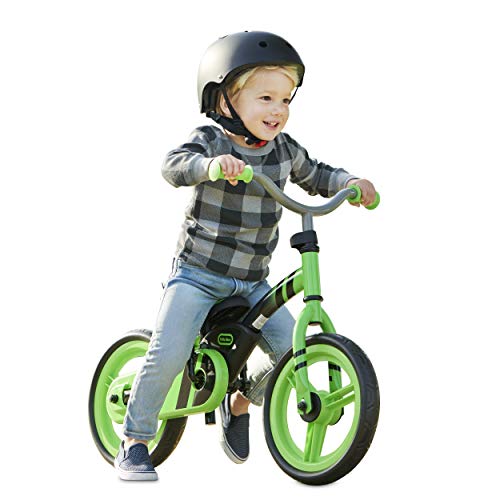
Little Tikes introduces an approachable option for younger riders with a single-gear design that folds pedals in and out for balance and pedaling practice. The transformation between modes is designed for ease, and an included Allen wrench assists with quick adjustments. The bike emphasizes a lightweight frame and simple assembly, making it appealing for families seeking a user-friendly transition tool from balance to pedal riding for children aged roughly 2 to 4 years.
Buying Guide: Key Considerations When Choosing a Balance Bike With Pedal Kit
- Age and growth range: Look for adjustable seats and handlebars to accommodate your child’s growth. Some models offer rapid 1-minute conversions, while others require more steps.
- Conversion speed and ease: If quick transitions matter, prioritize designs that convert without tools or with minimal setup steps. Pedal kits should attach securely and maintain chain protection via guards.
- Safety features: Chain guards, reliable braking systems, and training wheels (where included) contribute to a safer learning experience. Pneumatic tires provide better suspension and grip on varied surfaces.
- Weight and durability: Lightweight frames help children maneuver and steer, especially during early attempts at pedaling. Durable materials like carbon steel support longer use as kids grow.
- Wheel sizing and stability: 12, 14, and 16-inch options fit different ages. A lower seat height helps younger riders straddle the bike easily, while wider tires improve stability on uneven surfaces.
- Portability and storage: Consider bikes that fold or fold-and-build without heavy components if space is a concern in small homes or apartments.
- Brand and warranty: Reputable brands with clear warranty terms offer peace of mind during the learning phase and for future upgrades or replacements.
- Accessory availability: Pedal kits and training wheels should be readily available if you plan to upgrade later, ensuring compatibility with current frames.
Intended Use and Riding Environment
Urban environments with smooth sidewalks benefit from lighter bikes and precise brakes, while homes with longer driveways may favor sturdier constructions and higher-torque pedals. Consider the typical riding surfaces and your child’s confidence level when selecting a model.
Growth Trajectory
Choose a system that scales with your child’s development, not just a single stage. A 2-in-1 design that quickly switches from balance to pedal modes saves money and reduces clutter, while providing a consistent riding experience as skills progress.
Safety First
Always supervise early rides, inspect the chain guard and braking components, and ensure pedals are properly installed. A properly fitted helmet and protective gear remain essential during every ride, especially when experimenting with pedaling for the first time.