Parents seeking a versatile ride for kids ages 2 to 7 can consider balance-to-pedal bikes that switch quickly between modes. These bikes help children develop balance, motor skills, and confidence while reducing fear during the transition to pedaled riding. The following five models showcase quick-convert designs, durable constructions, and safety features suitable for homes and playgrounds across the United States.
| Product | Brand |
|---|---|
| Balance Bike 2 in 1 | bikeboy Store |
| My First Balance-to-Pedal Training Bike (Green) | Little Tikes Store |
| Balance Bike 2 in 1 for Kids 2-7 | Unspecified |
| SEREED Toddler Balance Bike | SEREED Store |
| SEREED Baby Balance Bike | SEREED Store |
Across these options, look for tools-free adjustments, quick conversion times, safety-minded brakes or no-pedal designs, and sturdy frames that can grow with a child. This guide highlights key features, potential tradeoffs, and how to choose the right model for your child’s age, height, and riding goals.
Balance Bike 2 in 1 From Bikeboy Store

The Balance Bike 2 in 1 offers a dual-use experience, allowing a quick switch between a toddler balance bike and a standard kids bicycle. It claims a conversion time of about 50 seconds, enabling rapid changes as a child grows. The design emphasizes balance training and coordination, with emphasis on both hands and feet for muscle development. Parents may appreciate the built-in safety considerations and the potential to boost self-confidence as riding skills progress.
Key considerations include the ease of conversion, overall weight, and whether the bike accommodates incremental height adjustments. The product notes suggest a focus on safety during learning and the ability to engage multiple muscle groups without overwhelming a young rider. This option can be a good fit for households seeking longevity from a single bike as a child progresses from balance to pedaling.
My First Balance-to-Pedal Training Bike (Green)

This Little Tikes model integrates a single-gear balance bike with pedals that fold in and out, facilitating a smoother learning curve for faster progression to pedaling. The bike is designed for ages 2-5 and includes an allen wrench for straightforward adjustments. Setup is described as quick, and the transformation between balance and pedal modes appears user-friendly for families seeking minimal downtime between configurations.
Considerations include the weight, ease of tool use, and how the pedal mechanism affects the child’s willingness to ride. The presence of a folded-pedal option can help in tailoring the riding experience to a child’s confidence level, possibly accelerating the transition to independent pedaling while maintaining balance practice.
Balance Bike 2 in 1 for Kids 2-7 with Pedal Kit
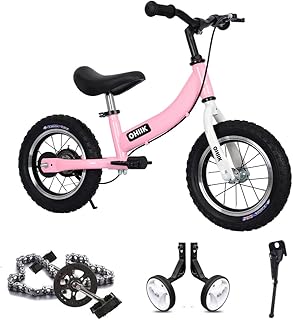
This 2-in-1 design targets a broader age range (roughly 2 to 7 years) with 12, 14, and 16-inch options, including a pedal kit and training wheels. The brand emphasizes a quick conversion—about 60 seconds—and notes patent-pending architectural features that reduce space concerns in homes. The balance mode is meant to foster athletic talent and balance, while the pedal mode with training wheels helps younger riders gain confidence and learn steering and braking skills.
Important considerations include the durability of the frame, the reliability of brakes, and how well the pedal kit integrates with existing balance components. For families prioritizing multi-stage riding and space efficiency, this model offers an all-in-one approach with scalable height and control.
SEREED Toddler Balance Bike (White)

The SEREED Toddler Balance Bike targets ages 2-5 with a focus on a sturdy carbon steel frame and adjustable features. The quick-release mechanism allows height adjustments of the seat and handlebars without tools, supporting growth and comfort. The no-pedal design improves balance and steering, aiding a smooth transition to pedals later. A personalized plate with stickers adds a fun customization aspect for young riders.
Key tradeoffs include ensuring the low seat height aligns with a child’s leg length and confirming the weight is manageable for caregivers during setup and transport. This model emphasizes safe balance development with easy adjustments and engaging customization options, which can help with long-term motivation to ride.
SEREED Baby Balance Bike For Toddlers

This SEREED Baby Balance Bike is designed for a younger group, recommended for 12-24 months, with a 4-wheel construction to provide stability for early walking and cruising. The product emphasizes a widened wheelbase to reduce tipping risk and gravity-based steering to help babies learn balance without getting overwhelmed. Non-slip wheels and a sturdy aluminum alloy frame contribute to a safer indoor or outdoor experience for very young riders.
For families starting from infancy, this model prioritizes safety and gradual exposure to riding motions. Consider whether your home has the space for movement-based play and if the child will benefit from an ultra-stable, low-slung design during initial explorations of balance and coordination.
Buying Guide: Key Purchase Considerations And Comparisons
- Age and growth range: Assess the child’s current age, height, and expected growth. Look for adjustable seats and handlebars, plus a bike that supports multiple years of use through mode changes and larger wheel sizes.
- Conversion speed and ease: Quick conversion is a major convenience feature. Check user reviews for real-world timing, tool requirements, and whether adjustments require additional parts or tools.
- Balance versus pedals: Determine how long the balance phase typically lasts for your child. Some bikes transition smoothly with pedal kits, while others emphasize no-pedal balance first to build confidence.
- Brakes and safety: Consider the braking system (hand brakes, rear brakes, or no pedal) and whether the design accommodates safe slowing without requiring shoes-based braking. Pneumatic or wider tires can offer stability on varied surfaces.
- Weight and portability: A lighter frame makes handling easier for caregivers during transport and storage. Compact designs help in small living spaces.
- Durability and materials: High-carbon steel or aluminum alloys balance weight and strength. Check for reinforced joints and reliable coatings to resist wear from outdoor use.
- Noise, maintenance, and assembly: Look for bikes with simple maintenance routines and few tools required for adjustments. Readability of instructions and included hardware matters for quick setup.
- Customization and aesthetics: Personalization options, such as plates or stickers, can engage children and encourage ongoing practice, potentially extending the bike’s lifecycle.
- Value proposition: Compare upfront cost against the number of years a model can support learning to ride. A higher initial cost may be justified by longer use and smoother transitions.
Across these models, families should balance the desire for rapid conversion with the practicality of maintenance, weight, and growth potential. For some children, a loving, distraction-free practice routine may matter as much as the mechanical features. The best choice aligns with your space, budget, and your child’s readiness to transition from balance to pedaling.