Choosing a balance bike for a toddler is about safety, ease of use, and growth potential. The right bike helps early riders learn balance, steering, and confidence before transitioning to a pedal bike. The options below are designed for ages around 2 to 5, feature adjustable components, sturdy frames, and playful personalization options that inspire kids to ride more often. The following table highlights key aspects of five popular models to help you compare at a glance.
| Product | Brand | Notable Feature |
|---|---|---|
| SEREED Toddler Balance Bike (White) | SEREED Store | Tool-free height adjust, customizable plate with stickers |
| KRIDDO Toddler Balance Bike (White) | KRIDDO Store | Customize plate with 3 sticker sets |
| SEREED Toddler Balance Bike (Mint Green) | SEREED Store | Similar adjustable and safety features, mint color |
| SEREED Baby Balance Bike (12-24 Months) | SEREED Store | Four-wheel design for indoor/outdoor use, early balance |
| SEREED Toddler Balance Bike (Pink) | SEREED Store | Sturdy steel frame, adjustable height, stickers |
SEREED Toddler Balance Bike White — Adjustable And Personalizable

The SEREED Toddler Balance Bike in White features a wide carbon steel frame capable of supporting up to 110 lbs. It includes a safe footrest pad, rubber grips, and a soft saddle with a starting seat height of 12.6 inches. A quick-release mechanism lets parents adjust seat height (12.6–17.1 inches) and handlebar height (19.6–22.5 inches without tools). The no-pedal design promotes balance and steering, helping children gain confidence as they prepare to ride a pedal bike. A customizable plate with three stickers encourages personal expression.
KRIDDO Toddler Balance Bike 12 Inch — Customize Plate

KRIDDO’s balance bike is built for toddlers aged 2 to 5 years old, featuring a 12-inch push bicycle frame that’s sturdy and easy to maneuver. It comes with a removable customizable plate and a set of three sticker options, letting kids design their own bike. The frame is designed for stability, with soft PU seating and grip-friendly handlebars. It supports up to 110 lbs, ensuring durability as kids grow. This model emphasizes early riding skills through balance, standing, and walking with a steady, kid-friendly design.
SEREED Toddler Balance Bike Mint Green — Adjustable Fit
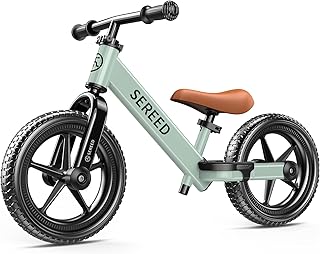
This Mint Green model mirrors the White version in safety and adjustability. It features a sturdy carbon steel frame that supports up to 110 lbs, a protective footrest, rubber-grip handlebars, and a soft saddle. The tool-free adjustment allows changing seat height from 13 to 18 inches and handlebar height from 20 to 23 inches, ensuring a comfortable fit as your child grows. The bike emphasizes balance and steering without pedals, with a customizable plate and sticker set for personalization.
SEREED Baby Balance Bike — 12-24 Months

Designed for the youngest riders, the SEREED Baby Balance Bike targets ages 12–24 months with a four-wheeled mini bike that emphasizes stability and safety. It uses a sturdy aluminum alloy frame, non-slip TPU handles, and a softly cushioned seat. The wide, fully enclosed wheels minimize clamping risk for tiny feet and provide gentle balance practice indoors or outdoors. Aimed at developing walking balance and early steering, this model encourages exploration in a safe, controlled way.
SEREED Toddler Balance Bike Pink — Personalizable

The Pink version shares the same sturdy carbon steel frame, 110 lb weight limit, and safety features as other SEREED models. It features a 12.6 inch starting seat height and tool-free adjustments for seat (12.6–17.1 inches) and handlebar heights (19.6–22.5 inches). The included customizable plate with three sticker options invites kids to personalize their bike, turning practice into a creative activity while developing balance and steering skills for an eventual transition to pedal bikes.
Buying Guide: Key Purchase Considerations
- Age and size suitability: Look for bikes designed for 2–5 year olds with adjustable seat and handlebar heights to grow with your child.
- Weight rating and frame material: A strong steel or alloy frame supports durable use and longer life as kids learn to ride; consider weight limits around 110 lbs as a general benchmark.
- Safety features: Prioritize wide, non-clamping wheels, soft seats, rubber grips, and a protected footrest to minimize the risk of injury during early practice.
- Adjustability and ease of setup: Tool-free adjustments save time and simplify transitions as your child grows; quick-release mechanisms are especially convenient.
- Customization options: Personalization plates and sticker sets can increase engagement and motivation to ride, especially for younger riders.
- Indoor vs. outdoor use: If teaching indoors, ensure wheels are non-marking and the frame size fits hallway or living space constraints; outdoor bikes should handle pavement and light trails.
- Portability and maintenance: Consider weight, foldability (if available), and simple maintenance tasks like tightening handlebars or replacing grips.
- Transition pathway: A well-fitted balance bike should facilitate a smoother progression from balance training to pedaling, reducing the learning curve for first pedals.