Parents looking to help children master cycling often start with a balance bike and plan a later transition to a pedal bike. This article reviews five suited options that support learning balance first, with easy pathways to add pedals later. Each pick emphasizes safety, adjustability, and beginner-friendly design, so kids can progress confidently from gliding to pedaling. Below you’ll find quick product highlights, a comparison table, and a buying guide to help you choose the best fit for your child’s size and growth trajectory.
| Product | Brand | Mode Transition | Starting Age | Key Benefit |
|---|---|---|---|---|
| My First Balance-to-Pedal Training Bike | Little Tikes | Balance to Pedal with folding pedals | 2-5 years | Fast learning curve with dual-mode design |
| Strider 14x Easy-Ride Pedal Kit | Strider | Transforms from balance to pedal bike | 4-7 years | Simple conversion with included wrench |
| SEREED Toddler Balance Bike | SEREED | No pedals; grow-with-kids design | 2-5 years | High adjustability to fit growing children |
| 12 Inch Kids Balance Bike (Single-Arm Fork) | Unspecified | Balance-first with pedal-ready setup | 2-5 years | Lightweight with puncture-proof tires |
| 3-in-1 Montessori Balance Bike | Unspecified | Balance, pedal, and training wheels modes | 2-7 years | Versatile, adjustable, multi-mode |
My First Balance-to-Pedal Training Bike for Kids

The Little Tikes balance-to-pedal bike is designed to accelerate the transition from balance to pedaling. It features a unique single-gear design with pedals that fold in and out, enabling a quick switch between Balance Mode and Pedal Mode. The design supports early confidence in balance and steering, while the pedal function introduces little ones to leg-powered propulsion without overwhelming them. Assembly is described as quick and tool-light, helping families get outdoors sooner. This model suits ages 2 to 5 and provides a clear path from gliding to pedaling as a child’s coordination develops.
Fits a growing child with simple mode switching that uses an included Allen wrench. In Balance Mode, kids focus on steering and balance; in Pedal Mode, they practice pushing with their legs while maintaining balance. The lightweight frame makes it easy for parents to carry to parks or sidewalks. For families prioritizing a fast transition with a single product, this option offers a practical blend of safety and versatility. Its foldable pedals are a helpful feature for stepwise progression in riding skills.
Strider 14x Easy-Ride Pedal Kit

The Strider 14x Easy-Ride Pedal Kit is designed to extend a child’s bike—from a balance bike into a pedal bike—without replacing the frame. It’s ideal when your child has mastered balance and is ready for pedaling. The kit attaches quickly, and Strider even includes the wrench needed for installation. A built-in chain guard protects tiny fingers from the chain while keeping dirt away from gears, and the coaster brakes simplify braking practice as kids learn pedal control. The kit supports a natural progression from gliding to pedaling with a focus on safety and ease of use.
In pedal-ready mode, kids can choose to “stride” around the pedals as they grow accustomed to pedal movement. This flexibility reduces the pressure to switch immediately and accommodates varying levels of readiness. The narrow pedals are designed to fit small feet, supporting a confident first pedaling experience while maintaining the compact feel of a balance bike. Parents can manage transitions at their child’s pace with this kit.
SEREED Toddler Balance Bike

The SEREED balance bike emphasizes sturdiness and safety, with a wide carbon steel frame supporting up to 110 pounds. It includes a safe footrest pad, rubber grips, and a soft saddle, with a starting seat height around 12.6 inches. Quick-release mechanisms enable tool-free adjustments to seat and handlebar heights, accommodating growth from early toddler years through age five. While it is a no-pedal design at the start, this model is positioned as a growth-oriented option that grows with kids and reduces the need for early bike purchases before mastery of balance and steering.
Personalization is supported with a plate and stickers for kids to customize their bike. The quick-adjust system helps parents tailor fit without tools, facilitating a smoother transition to a pedal bike when appropriate. The emphasis on safety, adjustability, and customization makes this a practical choice for families who want a durable bike that can adapt as children learn balance and steering skills.
12 Inch Kids Balance Bike (Single-Arm Fork)

This 12-inch balance bike brings a single-arm fork design, delivering a modern aesthetic along with stable handling for young riders. The unique fork design aims to simplify assembly and provide smoother steering for beginners. Tires are puncture-proof foam, which eliminates flats across typical riding terrains such as sidewalks and lawns. Weighing about 8.4 pounds, the bike remains easy for kids to maneuver and for parents to carry or store. It’s a practical option for families prioritizing low maintenance and reliability as children practice balance before adding pedals.
With a weight-friendly frame and a soft seat, this bike supports lasting comfort during learning sessions. The no-pedal phase aligns with staged learning, allowing kids to gain balance before pedaling. The foam tires ensure predictable performance in varied weather, minimizing surprises during learning rides. The bike’s light build and easy handling appeal to both beginners and caretakers seeking a straightforward introduction to cycling mechanics.
3-in-1 Montessori Balance Bike
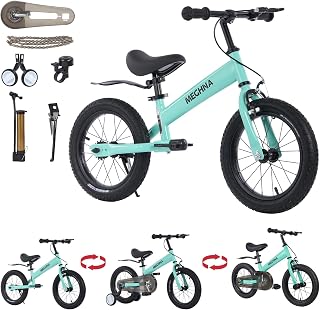
The 3-in-1 Montessori balance bike offers a versatile setup with three modes: balance bike, pedal bike, and tricycle configurations. This multi-mode design supports progressive learning, allowing kids to practice balance first, then pedal once comfortable, followed by a more stable tricycle mode if needed. It includes a tension-adjustable chain and adjustable handlebars and seat to accommodate growth. Dual braking options (hand brake and pedal brake) provide reliable stopping power during transitions, while training wheels offer added stability for beginners. This model emphasizes flexible, long-term use as a child’s riding skills mature.
The balance-to-pedal approach enables caregivers to tailor the learning curve, promoting safety and confidence as kids explore different cycling styles. The model’s adaptability makes it a compelling choice for households seeking a single, long-lasting rider that evolves with a child’s abilities. While it may require more initial setup, its broad range of configurations helps map out a clear progression from balance to pedal motion and beyond.
Buying Guide: Key Considerations When Choosing a Balance-Then-Pedal Bike
Learning to ride is a developmental milestone, so selecting the right bike matters. Consider your child’s current height and inseam, growth rate, and confidence level when choosing a balance bike with a future pedal option.
- Age and height fit: Look for adjustable seat and handlebar heights and weight limits that match your child’s current size and expected growth within 1–2 years.
- Transition plan: Decide whether you want a quick pedal conversion kit or a multi-mode bike that grows with your child, minimizing the number of products to purchase over time.
- Safety features: Prioritize soft saddles, non-slip grips, chain guards, and reliable braking options. Protect budding riders with sturdy frames and protective gear recommendations.
- Weight and maneuverability: Lighter bikes are easier for small children to handle. Check overall weight especially if you’ll be lifting the bike on stairs or into a car.
- Durability and maintenance: Foam tires eliminate flats, while steel frames offer strength. Consider bikes with tool-free adjustments to simplify growth spurts.
- Customization: Some models offer stickers or plates for personalization, which can boost kids’ enthusiasm and commitment to practice sessions.
- Budget and longevity: A flexible, multi-mode bike can provide longer use, reducing total lifetime cost even if the upfront price is higher.
With these considerations in mind, you can select a balance-friendly bike that transitions smoothly to pedal riding, while accommodating your child’s pace and preferences. The right choice balances safety, growth, and enjoyment, turning early gliding into confident pedaling in a structured, fun way.