Choosing a front-mounted baby bike seat or child carrier involves evaluating safety, compatibility, comfort, and ease of installation. This guide highlights five top options and explains what to look for when comparing models with handlebars and front-mount designs. Whether you’re bike commuting or enjoying weekend rides, the right setup helps you share the joy of cycling with your little passenger while maintaining control and stability.
| Product | Key Feature | Approx. Compatibility |
|---|---|---|
| iBert Front Mounted Child Seat | Patented mounting, 3-point harness, adjustable foot cups | Center-to-center stem spacing 52–62 mm |
| Kid’s Bike Seat Front Carrier (Ercabikker) | Padded seat/backrest, armrest, footrest | Crossbar compatibility; min/max diameter noted |
| Front Mounted Bicycle Seats for Children (Black) | Front mounted, handlebars, folding foot pedals | Aluminum frame, quick install with included tools |
| Kid’s Bike Seat Front Carrier (71n3hCMSzIL) | Padded seat/backrest, armrest and footrest | Padded comfort; PU leather and steel hardware |
| Kid’s Bike Seat Front Carrier (71o+cHvSCaL) | Padded seat, backrest, armrest, footrest | Similar high-quality construction |
iBert Front Mounted Child Seat

The iBert front-mounted child seat provides a secure ride for toddlers with a patented mounting system designed for straightforward installation on most adult bikes. It includes a 3-point safety harness and adjustable foot cups to position a child’s feet comfortably. A built-in dashboard adds a playful element while riding. It is recommended for ages 1 to 3, with a height range roughly 2’5″ to 3’2″ and a weight limit up to 38 pounds. Compatibility focuses on stem spacings from 52 mm to 62 mm center-to-center.
- Patented mounting kit included for secure installation
- Adjustable foot cups for customized comfort
- 3-point harness with padded seating for safety
Kid’s Bike Seat Front Carrier (Ercabikker)
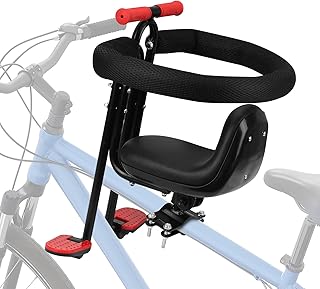
This child carrier emphasizes safety with a padded seat and backrest to support a comfortable riding position. The design includes armrests and a footrest to increase rider security. The seat uses PU leather combined with sponge for cushioning, and steel components for the armrest and footrest for long-lasting durability. It’s important to verify crossbar compatibility before purchasing, as diameters and mounting configurations vary between bike models.
- Padded seat and backrest for comfort
- Armrests and footrest for secure positioning
- PU leather and stainless steel construction
Front Mounted Bicycle Seats for Children (Black)

This model combines a front-mounted seat with handlebars and foot pedals, designed to keep children engaged and secure during rides. The aluminum alloy frame provides strength while the leather-covered saddle adds comfort. The included folding foot pedals and handlebars assist with proper hand and foot placement. An Allen key and installation hardware are provided for a quick setup, and user-friendly installation videos accompany the product to help with setup in about five minutes.
- Front mounted seat with handlebars and pedals
- Aluminum alloy frame and leather saddle
- Folding pedals; easy installation with included tools
Kid’s Bike Seat Front Carrier (71n3hCMSzIL)

This option emphasizes safety and comfort with a padded seat and backrest, plus armrests and a footrest to enhance security during rides. The build features PU leather and sponge for cushioning, with stainless steel for the footrest and steel for the armrest. The design promotes a comfortable riding position for children aged roughly 2 to 4 years and up to 55 pounds, making it a practical choice for daily trips or weekend adventures with a younger rider.
- Padded seat and backrest for comfort
- Armrests and footrest for added safety
- PU leather, sponge, stainless steel components
Kid’s Bike Seat Front Carrier (71o+cHvSCaL)

This carrier shares many safety features with its peers, including a well-padded seat and backrest, plus an armrest and footrest to help keep children secure. The construction emphasizes durability with PU leather cushioning and sturdy steel components. It is designed for children around ages 2 to 4 and up to 55 pounds, ensuring a broader range of compatibility with various lightweight bikes.
- Soft, padded seating for comfort
- Armrest, back support, and footrest for safety
- Durable PU leather and steel hardware
Buying Guide: Key Purchase Considerations For Front-Mount Bike Seats
When evaluating front-mounted seats or carriers with handlebars, consider the following factors to ensure a safe and enjoyable riding experience for you and your child.
- Compatibility: Check stem spacing, crossbar diameter, and mounting hardware requirements for your bike. Some seats specify center-to-center spacing, while others note crossbar dimensions. Measure ahead and compare with manufacturer specs.
- Safety Harness and Restraints: Look for a secure 3-point or better harness, padded seating, and a stable restraint system. A harness with easy adjustment helps ensure a snug fit as your child grows.
- Comfort and Support: Padded seats, backrests, and footrests contribute to a smoother ride. Consider the material quality (PU leather, fabric) and how easy it is to clean.
- Installation Ease: Some models include installation kits and video guides. A quick-install design minimizes time spent mounting and dismounting, which is helpful for frequent riders.
- Weight Capacity and Age Range: Verify weight limits and recommended age ranges to align with your child’s current size and anticipated growth. Overloading a seat can compromise safety and handling.
- Durability and Build: Aluminum or steel frames provide sturdiness, while hinges, locking mechanisms, and fasteners should be robust. Check for corrosion resistance and wear materials on footrests and handlebars.
- Maintenance and Cleaning: Surfaces that resist stains and are easy to wipe down save time. Removable cushions or seats simplify cleaning after rides in rain or mud.
- Ride Experience: Front-mounted seats shift weight and handling differently. Some designs include handlebars and foot pedals to engage children and improve balance, while others focus on a simple seating arrangement for younger riders.
- Regional Safety Standards: Ensure the product complies with local safety guidelines and has appropriate certifications if available.
In summary, the best choice depends on your bike’s compatibility, your child’s age and size, and how you plan to use the seat—daily commuting, school runs, or weekend adventures. Compare features like harness systems, foot support, and installation complexity to identify the model that best aligns with your riding style.