Finding the right handlebar height and reach can transform long rides, steep climbs, and technical descents. This guide highlights five top adjustable mountain bike stems that fit popular handlebar sizes and fork standards, helping riders dial in posture, reduce strain, and improve steering precision. Each option offers tested adjustability, durable construction, and clear installation guidelines for daily riding, weekend trail sessions, and long tours.
Summary of selected products:
| Product | Handlebar Size | Adjustable Length | Angle Range | Brand |
|---|---|---|---|---|
| CXWXC Adjustable MTB Stem | 31.8 mm | 90–145 mm | 70° | CXWXC |
| groword Bike Stem Riser | 31.8 mm | 150 mm total | 120° | groword |
| BUCKLOS Adjustable Bike Stem | 31.8 mm / 25.4 mm | 90–145 mm | -80° to +80° | BUCKLOS |
| Azarxis Stem | 25.4 mm / 28.6 mm | 130 mm | 0–60° | Azarxis |
| TRIWONDER Bike Stem | 31.8 mm | 90–130 mm | 0–60° | TRIWONDER |
CXWXC Adjustable MTB Stem 31.8mm 145mm

The CXWXC model is designed for riders seeking a straightforward height and reach adjustment on a 31.8 mm handlebar. Available lengths include 90, 110, and 145 mm, with a 70-degree rise to fine-tune the riding position. It’s positioned as a practical touring-friendly option, helping riders stay comfortable over long hours in the saddle.
Key features emphasize compatibility with 31.8 mm handlebars and 28.6 mm front forks, making it suitable for a wide range of mountain, road, and city bikes. The instruction notes remind riders to confirm size before purchase, reflecting the importance of correct fit for performance and safety.
CXWXC Adjustable MTB Stem 70 Degree—90/110/130/145mm

This version emphasizes a wide range of available lengths (90, 110, 130, 145 mm) along with a 70-degree angle. It is designed to help riders quickly change height and reach to fit climbing or descending needs. The same compatibility notes apply—31.8 mm handlebars and 28.6 mm front forks—making it a versatile option for many mountain bikes and road-adjacent builds.
BUCKLOS Adjustable Bike Stem MTB 25.4mm / 31.8mm

BUCKLOS offers broad compatibility across 31.8 mm and 25.4 mm handlebars and a fork diameter of 28.6 mm. It supports lengths from 90 to 145 mm and an impressive -80° to +80° angle range. Constructed from 3D forged aluminum alloy, this stem emphasizes strength, corrosion resistance, and versatility for commuters, mountain riders, and road cyclists, with included hex wrenches for on-the-fly tuning.
Azarxis 25.4mm / 31.8mm Stem (130mm, 0–60°)
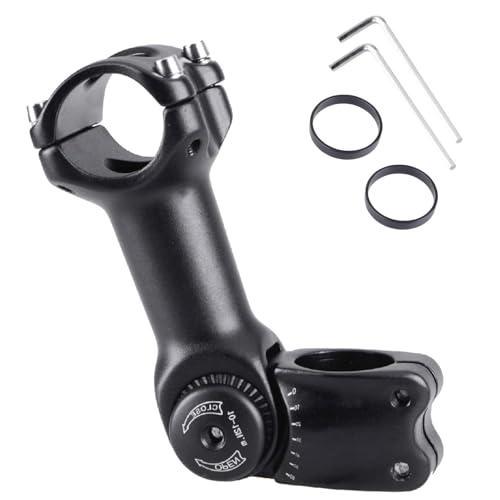
Azarxis provides a compact 130 mm option with an adjustable 0–60° angle, compatible with 28.6 mm steerer tubes and 25.4 mm handlebars. Made from 6061 aluminum, the stem balances strength and light weight. Its four-bolt clamp is designed to secure the handlebar firmly, offering reliable performance for mountain, road, BMX, and city cycling disciplines.
TRIWONDER Bike Stem 90/110/130mm

TRIWONDER’s stem offers 90, 110, and 130 mm lengths with a 0–60° adjustable angle. It is designed to fit 31.8 mm handlebars and 28.6 mm steerer tubes, with a focus on straightforward height adjustment and secure clamping via a four-bolt design. The model aims to balance ease of install with dependable ride quality for mountain biking and mixed-terrain use.
Buying Guide: Key Purchase Considerations
Fit and compatibility are the primary concerns. Confirm the handlebar diameter (commonly 31.8 mm) and fork steerer diameter (often 28.6 mm) for a proper match. Consider the available lengths (ranging from around 90 to 150 mm) to achieve your desired cockpit position. If you ride on steep climbs or aggressive descents, a wider adjustment range (60°–80°) can help you fine-tune posture without replacing parts.
Angle range and adjustability are critical for comfort. Higher-angle ranges enable you to raise the bars for a more upright riding stance, reducing back and neck strain on long rides. Conversely, lower or negative angles can improve aerodynamics and control on steep or fast sections. Some stems also offer symmetric left-right angle capabilities, which can aid in asymmetrical riding setups.
Durability and materials matter on rugged terrain. Look for stems made from forged aluminum alloys (6061 or similar) with corrosion-resistant finishes. A sturdy clamp system (typically four-bolt) helps prevent slippage and handlebar twist under heavy loads. Pre-installed tools or included wrenches can simplify adjustments in the field, but secure installation using the correct torque is essential.
Installation and maintenance are practical aspects to weigh. Check if the stem requires special tools or if it includes hex keys for quick tweaks. If you frequently experiment with cockpit position (mixed riding, long tours, or bikepacking), a stem with a wide range of positions and straightforward adjustments saves time and effort during trips.
Price versus value is a consideration for riders upgrading or dialing in a new bike. Inexpensive options can deliver reliable performance, but higher-quality stems may offer better weight, stiffness, and long-term durability. For most enthusiasts, choosing a model with broad compatibility, robust construction, and a broad adjustment range yields the best return on investment.
Riding style matters too. Trail riders may prioritize durability and quick micro-adjustments, while city riders may value compact weight and ease of use. Road cyclists who occasionally ride gravel or light mountain trails can benefit from stems that support both upright and aerodynamic positions. Always compare the product’s specifications with your bike’s geometry to ensure a harmonious fit.