Finding the right motor upgrade or conversion kit can transform a regular bicycle into a robust electric ride. This guide highlights five top-performing options that fit a variety of bikes and riding styles, from high-powered dual-motor e-bikes to versatile front-wheel kits. Each pick includes key specs, typical applications, and what to consider when upgrading your bike’s propulsion system. Use this overview to compare performance, weight, compatibility, and installation requirements before buying.
| Product | Brand | Motor Type | Approximate Power | Notable Range or Feature |
|---|---|---|---|---|
| EDUAMOEK Peak-6000W Dual-Motor E-Bike | EDUAMOEK | Dual Brushless Motors | 6000W peak | 46 mph top speed; 52V/34Ah battery; 5 riding modes |
| PEXMOR Electric Bike Conversion Kit, 48V 1200W | PEXMOR | Front Wheel Hub Motor | 1200W | 3-mode controller; PAS/LCD; up to 36.6 mph |
| VEVOR 1000W Front Wheel Conversion Kit | VEVOR | Front Hub Motor | 1000W | High torque; LCD display; 420 rpm |
| AW Electric Bicycle Motor Kit 1000W | AW | Front Hub Motor | 1000W | 3-speed indicators; 26″ compatibility |
| Pazcii 72V 2000W E-Bike Kit | Pazcii | Rear Wheel Motor | 2000W | 560rpm; kit includes essential accessories |
Note: The items above cover a range of install types (front hub vs rear wheel, dual-motor vs single-motor) and voltage levels. Always verify compatibility with your bike frame, wheel size, dropout spacing, and braking system before purchase.
EDUAMOEK Peak-6000W Dual-Motor E-Bike

This high-power dual-motor system uses two peak 3000W brushless motors to deliver strong acceleration and climbing ability. The setup supports up to 46 mph and is paired with a large 52V 34Ah lithium battery (approximately 1768Wh), enabling long-range riding in PAS mode. With six modes including a walk and cruise option, riders can tailor performance for hills or mixed terrain. The BMS manages charging and safety, reducing concerns about overcharging and battery degradation over time.
PEXMOR Front Wheel 1200W Conversion Kit

The PEXMOR kit converts a 26″ bicycle with a 100mm/3.93″ front dropout to electric power via a 48V 1200W hub motor. It features a 3-mode controller supporting Hall and non-Hall operation, a sine-wave controller for efficiency and reduced noise, and a pedal-assist system with throttle and PAS presets. This kit emphasizes a smooth ride with multiple riding modes to reduce fatigue on longer trips and varied terrain.
VEVOR 1000W Front Wheel Kit

VEVOR’s kit centers on a 1000W hub motor with a 26-inch wheel, delivering strong torque at up to 420 rpm. It includes a high-definition LCD display to monitor speed, distance, PAS level, and battery status. The copper core motor promises durable performance with reliable heat resistance and relatively quiet operation for a motor of this power level, making it suitable for riders who want a responsive upgrade without excessive noise.
AW 1000W Front Wheel Motor Kit
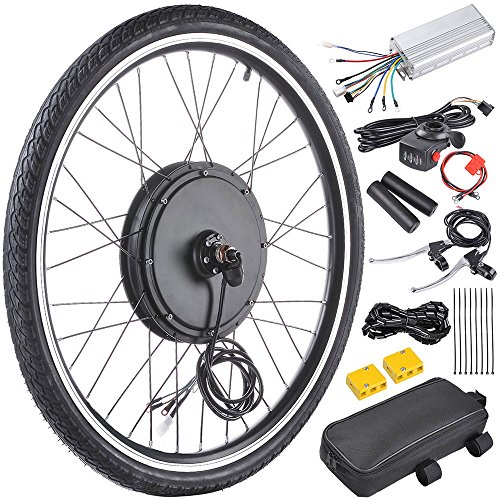
AW’s kit offers a straightforward upgrade path with a 1000W front hub motor designed for compatibility with most 26″ bicycles. It emphasizes a durable aluminum frame, a simple three-indicator thumb throttle, and compatibility with either disc brakes or V-brakes. This kit is positioned as a reliable, easy-to-install option for riders seeking more assist with hills and longer commutes without a battery-hogging dual-motor setup.
Pazcii 72V 2000W E-Bike Kit

The Pazcii kit features a rear-wheel 2000W motor with a robust 560rpm and a full set of components to complete the conversion. The kit emphasizes solid metal construction, including an aluminum motor wheel and frame attachments designed for secure mounting. It is positioned for riders seeking significant power for steep climbs or off-road riding; the included LCD display and PAS support help manage power usage and battery life during longer rides.
Buying Guide
- Bike compatibility: Confirm wheel size (26″, 27.5″, or 29″), dropout spacing, brake type, and available power capacity on your frame.
- Motor type and placement: Front hub kits are generally easier to install and lighter but can affect steering at high speeds; rear hub or dual-motor setups offer more balanced torque for off-road use.
- Voltage and battery integration: Higher voltage systems like 52V or 72V deliver more torque and speed but require compatible controllers, wiring, and battery capacity for range and safety.
- Controller features: Look for PAS modes, throttle options, regenerative braking compatibility, and LCD displays to monitor ride data.
- Weight and handling: Powerful kits add weight to the bike; consider how it affects ride feel, braking, and center of gravity, especially on non-motorized frames.
- Installation effort: Some kits require frame drilling or custom brackets; others are plug-and-play with existing brake or wheel setups.
- Maintenance and support: Prefer kits with readily available spare parts, clear manuals, and solid warranty coverage for long-term use.
- Regulatory considerations: Check local regulations on e-bike power limits and classifications to ensure compliant riding.
When choosing, prioritize your typical riding environment (city commuting vs. off-road) and how much weight you’re willing to add to the frame. For frequent long rides or steep terrain, higher power and larger battery capacity usually yield better range and performance. For casual use or daily commutes, a balanced front-hub kit with strong torque and good efficiency can be sufficient.