Are you exploring 80cc mini bike engines to boost speed, power, and fun on a DIY or off-road ride? This guide highlights five well-regarded 80cc and related displacement engine kits that fit most 26–28 inch bikes, quad bikes, and DIY motorized bicycles. Each product is evaluated for durability, power, fuel efficiency, and ease of installation to help you choose the best option for your project.
Product Overview
- Name: 80CC Bicycle Engine, 2 Stroke Gas Motorized Bike Motor Mini Bike Motor Bicycle Engine with CDI Ignition System for 26-28″ Bikes
- Name: 4-Stroke Gas Engine Motor, 212cc 7.5HP Kart Engine Pull Start Mini Bike Engine Motor with Air Cooling System and Air Filter
- Name: 100CC 4-Stroke Gasoline Engine Kit, 3.5HP Bicycle Engine Kit, Hand Start Gas Engine with Chain Drive
- Name: 80cc Bicycle Engine Kit, 2 Stroke Motorized Bike Kit, Petrol Bikes Motor with Digital Computer for 26-28″ Bikes
- Name: 80cc 2-Stroke Bicycle Gasoline Engine Kit, Motorized Bike Kit, Single Cylinder Air-Cooled Engine
Buying with confidence means comparing performance, durability, and reliability across options. The following sections present five engines that balance power, fuel efficiency, and ease of installation for 26–28 inch bicycles and DIY builds.
80Cc Bicycle Engine With CDI Ignition System

The 80cc bicycle engine is crafted from aluminum and iron for high hardness and rust resistance, ensuring a long service life and minimal bending. It features a 2-stroke, single-cylinder design delivering up to 1.85 kW and 1.65 horsepower, with a maximum speed around 5500 rpm. This combination supports noticeably faster rides while maintaining efficiency. The included CDI ignition system simplifies starting and improves reliability in varying conditions. Suitable for most 26–28″ bicycles seeking an energetic boost.
4-Stroke 212cc Mini Bike Engine With Air Cooling

This 212cc four-stroke engine offers robust performance with 7.5 horsepower and a 3600 rpm output, designed for durable, high-efficiency operation. Built with iron, aluminum, and die-cast components, the engine emphasizes corrosion resistance and long service life. The system includes air cooling and an air filter, improving reliability under continuous use. Its design emphasizes fuel efficiency compared to typical two-stroke units, making it a solid choice for riders who value consistent performance and longevity on larger builds.
100Cc 4-Stroke Gasoline Engine Kit
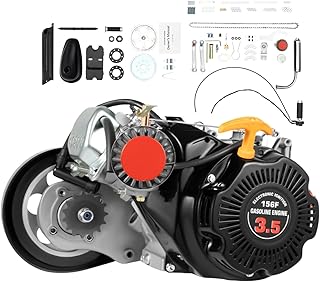
This kit combines a sturdy aluminum engine shell with a 0.52-gallon fuel tank and a durable 415# steel chain. The 3.5HP displacement delivers solid acceleration, with a maximum 2 kW output and up to 3600 RPM. The design supports a reliable chain drive for a secure transmission to the wheels. A protective coating and baking paint on the fuel tank aid rust resistance and longevity, making it a dependable option for mid-range motorized bike builds.
80Cc Bicycle Engine Kit With Digital Computer

This 80cc, 2-stroke kit centers on a lean, efficient design that delivers about 2.58 horsepower and roughly 23.6 mph top speed. The engine supports a digital computer integration to help monitor performance and fuel usage. Fuel efficiency is highlighted by a consumption rate of approximately 0.53 gallons per 62.14 miles, aiding longer rides between fill-ups. Installation is straightforward on most 26–28″ V-frame bikes, making it a practical option for riders upgrading an everyday ride.
80Cc 2-Stroke Gasoline Engine Kit
This kit uses a robust aluminum and iron construction with lathe machining and spray painting for improved impact resistance and corrosion protection. A two-stroke engine delivering 2.1 kW and 2.58 hp achieves up to 5000 RPM, with top speeds around 23.61 mph. The engine includes a fuel tank with a capacity of about 0.53 gallons, enabling longer rides between refueling. The design prioritizes durability and strong power output for DIY motorized bicycle projects.
Buying Guide: Key Purchase Considerations
When selecting an 80cc or similar motor kit for a bicycle, there are several critical factors to consider to ensure compatibility and satisfaction:
- Engine type and power: Two-stroke engines tend to offer higher power-to-weight ratios and quicker acceleration, while four-stroke units emphasize fuel efficiency and longer lifespan. Consider your riding style and reliability needs.
- Installation compatibility: Check frame compatibility with 26–28″ bikes, existing chain drive, and whether the kit includes all necessary mounting hardware, exhaust, and CDI or ignition components.
- Fuel efficiency and range: Look for kits advertising gallons-per-mile figures or specific miles-per-gallon estimates to gauge how far you can ride between refills on a typical commute or trail ride.
- Durability and materials: Engine blocks and casings constructed from aluminum and steel/brass areas typically offer better wear resistance and corrosion protection, especially in varying weather conditions.
- Cooling and maintenance: Air-cooled designs are simpler and lighter, but liquid cooling can improve performance in sustained use. Ensure an accessible air filter and straightforward maintenance intervals.
- Starting mechanism: Hand-start versus pull-start methods affect ease of use, especially for riders who may face cold starts or poor conditions.
- Safety and legality: Check local regulations regarding motorized bicycles and ensure you follow installation guidelines and required safety equipment to ride legally and safely.
- Parts availability: Consider the availability of replacement parts such as carburetors, filters, gaskets, and ignition components to minimize downtime.
Performance Perspectives
- Power vs. weight: Heavier engines may require frame reinforcement and balanced mounting, but offer higher torque suitable for hills and heavier riders.
- Reliability: Four-stroke options typically require less frequent maintenance, whereas two-strokes require more careful fuel and oil management.
- Ease of upgrade: Some kits include digital displays or CDI ignition for simplified tuning, while others rely on manual adjustments that may require more mechanical knowledge.
Installation and Maintenance Tips
- Follow the manufacturer’s mounting diagram precisely to avoid frame distortion or misalignment of the drive system.
- Use fresh, appropriate fuel blends and, where applicable, correct oil-to-fuel mixtures to preserve engine life and performance.
- Regularly inspect mounting bolts, hardware, and the chain drive for wear and secure connections.
- Keep cooling pathways clear of debris and ensure adequate air flow around air-cooled engines during operation.