Exploring 250W electric bike kits helps riders upgrade standard bicycles into efficient, motor-assisted rides. This guide covers five top kits, detailing components, compatibility, performance, and installation considerations to help you choose the right setup for your bike and riding style. Each section highlights key features, what to expect in use, and practical notes to avoid common pitfalls.
| Product | Wheel Size Range | Motor Power | Installation Style | Note |
|---|---|---|---|---|
| Electric Bicycle Motor Kit (1) | 16-28 inch | 250W | Chain Drive | Brushed controller included |
| Electric Motor Kit (2) | Unknown | 250W | Direct Drive | 12V system |
| Common Bike Left Chain Drive Customized (3) | Various | Unknown | Chain Drive | Compatibility note required |
| LYNICESHOP Front Wheel Kit (4) | 20 inch | 250W | Front Wheel | Requires compatible tire |
| Electric Bicycle Motor Kit (5) | Most Bicycles | 250W | Rear Derailleur | Mid installation |
Electric Bicycle Motor Kit 24V 250W — Chain Drive

The kit includes a complete set for converting a bicycle to electric drive: a 24V 250W DC motor, a chain, a freewheel, a motor controller, a mounting plate, an accelerator handle, and all necessary mounting accessories. It’s designed for 16-28 inch wheels, making it compatible with a broad range of standard bicycles and DIY projects like scooters or skateboards. The material construction uses high-grade aluminum, iron, and copper, then finished with a baking paint process to improve abrasion resistance and longevity. This kit emphasizes a straightforward installation for riders comfortable with mechanical work, enabling an efficient upgrade without a full frame redesign.
Compatibility notes emphasize standard handlebars with a 0.87 inch diameter as a baseline and wheel sizing 16-28 inches. Potential users should verify fitment before purchase, especially if modifying brakes or frame brackets. Because the system relies on a brushed controller and chain drive, expect robust, uncomplicated operation with a mid-range efficiency profile.
Consider the following when evaluating this kit: ease of installation, availability of compatible accessories, and the balance between motor power and pedaling effort. For daily commuting or recreational rides, this setup provides reliable assist, with a focus on durability and a broad compatibility window that suits many 2-wheeled DIY projects beyond standard bikes.
Electric Motor Kit 12V 250W — 2750RPM

This motor kit is built around a 12V, 250W motor delivering up to 2750 RPM, with a straightforward speed controller and a compact form factor suited for smaller bikes or scooter-style builds. The housing uses aluminum alloy for durability and heat resistance, with multiple heat-dissipation features to manage steady operation and minimize thermal throttling during longer rides. The design aims for a balance between efficiency and simplicity, offering a robust option for hobbyists who want a dependable motor with predictable performance.
Included components focus on ease of use: a motor with a pre-sized gear train, a speed controller, and a compact enclosure designed to minimize wiring clutter. The kit emphasizes a forward and backward rotation capability, which adds flexibility for different drive configurations. Motor performance remains steady with low noise and a focus on reliability for everyday use rather than peak speed. Riders should align expectations with terrain and rider input when planning upgrades.
Prospective buyers should examine compatibility with their bike’s frame, braking system, and chainline. While the kit emphasizes robust materials and heat management, users should be mindful of overall weight, electrical wiring, and the need to verify battery compatibility to avoid overloading the system.
Common Bike Left Chain Drive Customized for Geared Bicycle Derailleur

This kit addresses a left-chain-drive configuration tailored for bikes with V-brakes on the rear wheel. Compatibility varies for bikes with disc or coaster brakes, so potential buyers should confirm the braking setup before purchasing. The kit includes a motor bracket that may need frame-specific adjustments, so users should be prepared to modify the bracket if necessary. The manufacturer notes that the setup is designed to assist pedaling rather than deliver high-speed thrills, suggesting a practical approach to extending ride length and reducing rider fatigue.
Key considerations include brake compatibility, frame clearance for the motor and bracket, and the potential need for custom fitting. The kit’s focus on pedal assist with moderated speed makes it suitable for riders who want a gentle, reliable boost for daily commutes or casual weekend rides. This option may appeal to DIY enthusiasts who enjoy customizing fit and fitment for specific bikes and frame geometries.
Users should also factor in maintenance needs and future upgrades, as a left-chain-drive setup can require careful alignment and tensioning to maintain performance and minimize wear on drivetrain components.
LYNICESHOP 36V 250W Front Wheel Motor Kit

This front-wheel motor kit operates at 36V and 250W, designed for 20-inch wheels. It requires careful attention to color-coded wiring to ensure correct controller connections, as miswiring can damage components. The kit assumes a compatible battery setup, so users should match the power source to the controller’s expectations. It supports both V-brake and disc brake configurations, broadening compatibility for small-wheeled bikes and certain city bikes.
Important installation notes include ensuring non-water exposure, as the kit is not waterproof, and confirming that the battery and controller voltages align with the system specs. The kit emphasizes performance with a strong current supply, offering stable operation for efficient propulsion. Prospective buyers should evaluate wheel size, tire compatibility, and frame clearance to ensure smooth integration with their bike’s front wheel hub.
Potential users should also plan for weight distribution changes resulting from a front-mounted motor and consider how steering and braking feel with the added mass. Proper mounting and alignment are crucial for long-term reliability and ride quality.
Electric Bicycle Motor Kit — 24V 250W Rear Derailleur
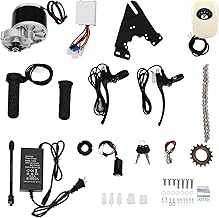
This mid-installation kit features a 24V 250W motor with a rear derailleur setup, including a brushed controller, light, and key. Materials emphasize durability, with copper components for wear resistance and a flywheel feature to minimize resistance when the motor is not powered. The complete accessory lineup aims to simplify installation, enabling quick setup with minimal additional purchases. The design focuses on stable operation, easy maintenance, and practical performance for common riding scenarios.
Riders should consider how the rear-derailleur configuration interacts with their drivetrain and gear choices. The kit’s durability and flywheel feature help preserve pedaling efficiency during transitions, which can be beneficial for riders who blend pedal power with motor assistance. Compatibility with existing gears, chainlines, and frame clearance are key factors in achieving a balanced ride experience.
Maintenance tips include inspecting electrical connections, ensuring clean wiring paths, and periodic checks of the derailleur alignment to prevent chain drop or mis-shifting after installation. This setup is often chosen by riders who want a traditional derailleur experience with motor-assisted support.
Buying Guide: Key Purchase Considerations and Comparisons
- Bike compatibility: Check wheel size, brake type, mounting points, and frame clearance. Some kits are designed for 16-28 inch wheels, others target specific diameters like 20 inches.
- Power and speed balance: A 250W motor is common for mid-range assist. Consider your desired riding style—commuting, hills, or casual cruising—and how much pedal boost you want versus pure motor output.
- Drive configuration: Front-wheel, rear-axle, or chain-drive setups each have pros and cons for weight distribution, steering feel, and drivetrain wear. Ensure your drivetrain and brakes can handle added torque and weight.
- Controller and wiring: Controllers affect performance, heat management, and battery compatibility. Look for heat dissipation features, proper insulation, and clear wiring diagrams to reduce install errors.
- Battery considerations: Battery voltage and capacity determine range and compatibility with the motor. Match the battery to the controller’s voltage and current rating to avoid overloading the system.
- Weather resistance and durability: Many kits aren’t fully waterproof. Plan for rider usage in varying conditions and consider protective enclosures or weatherproofing where appropriate.
- Installation effort: Some kits are more plug-and-play, while others require custom brackets or frame modifications. Assess your DIY comfort level and available tools before purchasing.
- Maintenance and updates: Regular inspection of electrical connections, motor mount tightness, and chain tension helps prolong kit life. Choose kits with readily available replacement parts and support.
- Warranty and seller support: Check warranty terms and seller responsiveness, especially for DIY or customized builds. A solid support channel can save time and frustration.
- Safety considerations: Ensure braking performance remains strong with added weight, and verify that lights and reflectors meet local safety requirements if you plan to ride at night.
In sum, a 250W bike kit can provide practical, efficient propulsion for daily riding, casual exploration, or hobbyist projects. Evaluate wheel size compatibility, drivetrain integration, and your comfort level with installation. Compare kit components, controller features, and battery compatibility to find the option that best aligns with your bike and riding goals.