The 16 inch bike is a common first big ride for kids, balancing stability with the thrill of independence. This guide highlights five reliable 16 inch bikes designed for young beginners, with features like lightweight frames, easy braking, and adjustable seats. Whether your child is just learning to balance or ready for longer rides, these models offer safe, age-appropriate design and durable construction to support growing confidence on two wheels.
Summary of chosen products
| Product | Brand | Recommended Age / Height | Key Features |
|---|---|---|---|
| WEIZE Kids Bike, 16 Inch (Blue) | WEIZE | 4-6 years (38″-48″ height) | Coaster brake, lightweight frame, full chain guard |
| WEIZE Kids Bike, 16 Inch (White/Black) | WEIZE | 4-7 years (41″-53″ height) | Adjustable seat & handlebars, durable steel, training wheels option |
| WEIZE Kids Bike, 16 Inch (Black) | WEIZE | 4-6 years (38″-48″ height) | Coaster brake, protective chain guard, beginner-friendly |
| WEIZE Kids Bike, 16 Inch (White/Black, Adjustable) | WEIZE | 4-6 years (38″-48″ height) | Adjustable seat & handlebars, lightweight frame, starter-friendly |
| BODIOO Kids Bike, 16 Inch (Blue) | BODIOO | 4-6 years (41″-46″ height) | Easy assembly, training wheels, fully enclosed chain |
WEIZE 16-Inch Blue Kids Bike for Ages 4-6

Designed for younger riders, this 16″ WEIZE bike emphasizes a balance between manageable weight and sturdy construction. The 38″ to 48″ rider height guidance helps parents gauge suitability, and the coaster brake provides intuitive stopping for beginners. A full-coverage chain guard adds protection against clothing and skin contact during pedaling, while the smaller grips and lighter frame support confident handling as new riders learn to steer and brake.
WEIZE 16-Inch White/Black Bike with Adjustable Seat

This WEIZE model targets 4-7 year olds with a rider height range of 41″-53″. Its standout feature is adjustable seat and handlebars, enabling the bike to grow with your child. Built with a durable steel frame and anti-slip tires, the bike helps kids gain balance while remaining sturdy through early riding sessions. Training wheels are detachable, supporting progression from stabilizing to independent riding as confidence builds.
WEIZE 16-Inch Black Kids Bike for Everyday Learning

With the same 16″ sizing, this WEIZE bike emphasizes a safe, beginner-friendly ride. It carries a similar size recommendation (38″ – 48″ riders) and features a full coverage chain guard to minimize clothing tangling. The handbrake is designed for small hands and light control, ensuring reliable stopping while new riders master maneuvering and braking on gentle slopes or curbs.
WEIZE 16-Inch White/Black Adjustable Kids Bike
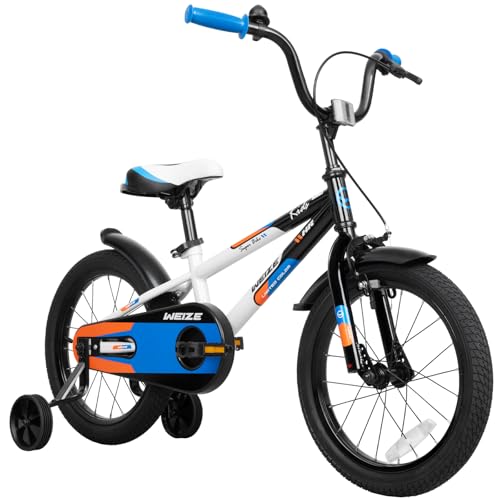
This WEIZE model blends a lightweight frame with adjustable saddle and handlebars, enabling multiple growth stages from early learners to a more seasoned rider. It emphasizes child-friendly engineering—from smaller grips to controlled braking—to support confidence on the first rides away from home. Durable wheels and sturdy construction help absorb bumps common on sidewalks and driveways, making balance practice safer and steadier.
BODIOO 16 Inch Kids Bike with Training Wheels

The BODIOO option focuses on ease of assembly and beginner-friendly features. It includes an early training wheel setup, quick-release seat for simple height adjustments, and a full chain guard to keep clothing and limbs clear of moving parts. The bike is designed to accommodate riders between 41″ and 46″ tall, providing stability during the balance-to-pedal transition. Its durable frame and set of safety features make it a solid starter bike for young riders.
Buying Guide: Key Purchase Considerations For 16-Inch Kids Bikes
When choosing a 16-inch bike for a child, several factors influence safety, comfort, and long-term satisfaction. Consider the rider’s current height and inseam, but also plan for growth over multiple seasons. A bike that’s slightly too tall can be intimidating, while one that’s too small may impede learning and long-term use.
- Brake system: For beginners, a coaster brake with optional hand brake can reduce confusion. Some 16″ bikes rely solely on coaster brakes, while others add a front or rear hand brake for early braking practice. Check how intuitive the brake is and whether it’s comfortable for small hands.
- Gearing and drivetrain: Most 16″ bikes use a single-speed design which simplifies riding and maintenance. A simple drivetrain helps kids focus on balance, steering, and pedaling technique without worrying about shifting.
- Frame and weight: A lightweight frame improves control, acceleration, and stopping. Aluminum or high-strength steel frames offer durability without excessive weight. Ensure the weight is manageable for the child to lift and maneuver.
- Adjustability: Seats and handlebars that can grow with your child extend the bike’s usefulness. Quick-release seat clamps and adjustable handlebars reduce the need for tools and offer faster setup for new riders.
- Safety features: A full chain guard, fenders, and reflectors increase protection and visibility. Training wheels, when included, provide a staged path toward independent riding.
- Wheels and tires: Durable, puncture-resistant tires with good tread prevent frequent flats and improve grip on sidewalks and driveways. Anti-slip tires contribute to balance during learning.
- Training wheels vs. balance-first design: Training wheels support initial stability, while balance-focused bikes (or later removal of wheels) emphasize balance and steering. Decide which approach aligns with your child’s learning style.
In practice, the best choice balances safety features with growth potential. For many young riders, a bike with a stable frame, easy braking, adjustable components, and a protective chain guard offers a smooth transition from coasting to pedaling. Always supervise early rides and select protective gear, including a properly fitted helmet, knee and elbow pads, and closed-toe shoes for consistent performance and safety on the curb and driveway.