Choosing the right 1 1/4 inch bike stem can improve steering accuracy, comfort, and control on road, gravel, and mountain bikes. The following reviewed options cover standard, oversized, and adapter stems to fit varying steerer tubes. This guide highlights how each product performs, its compatibility, and what to consider before buying.
Summary of Selected Products
| Product | Brand | Key Feature | Typical Use |
|---|---|---|---|
| Ritchey Stem 1 Inch 1/4 WCS C220 Oversize | Ritchey | Oversize 1 1/4 inch, 6° angle | Road or mountain, 100 mm |
| REDSHIFT ShockStop Suspension Stem | REDSHIFT | Shock-absorbing, non-standard 1 1/4 in steerer | Road, gravel, hybrid, e-bikes |
| Fouriers Alloy Fork Shim | Fouriers | 1 1/4″ to 1 1/8″ adapter, 38 mm length | Fork compatibility adjustments |
| FOMTOR 25.4 Stem | FOMTOR | Short 45 mm, 25.4 mm clamp | Mountain, road, BMX |
| HARFINGTON 1 1/4″ Headset Top Cap | HARFINGTON | Headset top cap for 1 1/4″ stems | Road, mountain |
The table above lists stems and related adaptations that commonly support 1 1/4″ steerer tubes. When selecting, verify compatibility with your fork crown, steerer diameter, and handlebar clamp. The following sections provide detailed product notes and usage scenarios to help you compare options effectively.
Ritchey Stem 1 Inch 1/4 WCS C220 Oversize Stem

The Ritchey WCS C220 oversize stem is designed for 1 1/4″ steerers with broad compatibility across road and mountain frames. A 100 mm length and a 6° angle provide solid steering leverage while maintaining a compact profile. This model supports 31.8 mm fork pivots, suitable for many contemporary frames. Use for riders seeking dependable performance in mixed-terrain riding without excessive height changes.
REDSHIFT ShockStop Oversized Stem

REDSHIFT’s ShockStop stem targets riders with non-standard 1 ¼” (31.8 mm) steerers. It offers substantial vibration damping, reducing fatigue and distributing impacts across the stem. This model emphasizes comfort and control on rough pavement, gravel, and mixed-terrain rides. Check Canyon or Giant bikes for compatibility and weigh the benefits of reduced fatigue against any potential weight increase.
Fouriers Alloy Fork Shim 1 1/4″ To 1 1/8″

The Fouriers shim provides a simple diameter reduction from 31.8 mm to 28.6 mm, enabling compatibility between certain oversized headsets and standard 1 1/8″ forks. Weighing roughly 15 g, the shim’s light construction makes it a practical option for retrofitting frames without major component changes. It’s best used when a precise fit is required without altering the handlebar height significantly.
FOMTOR 25.4 Stem 45mm
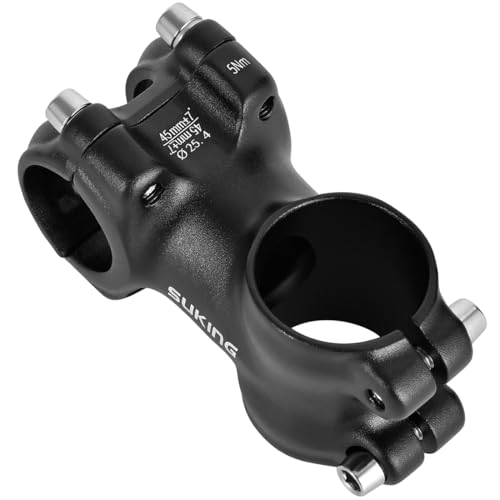
The FOMTOR stem features a 25.4 mm clamp and a short 45 mm reach suitable for tight cockpit setups. The 28.6 mm steerer compatibility and 6061 T6 aluminum construction balance stiffness and weight. This option suits riders seeking a compact, responsive steering feel on mountain or road bikes with 1″ handlebars and 1-1/8″ steerer tubes, respectively.
HARFINGTON 1 1/4″ Headset Top Cap

The HARFINGTON top cap is crafted for 1 1/4″ headset systems, delivering a secure cover for the front cross tube. Aluminum construction keeps weight down while maintaining durability. Aesthetically, the black finish with a diamond-like texture adds a refined touch to upgraded cockpits, and the cap supports consistent preload on compatible headsets.
Buying Guide: Key Considerations For 1 1/4 Inch Stems
Compatibility is the foundation of a good stem choice. Confirm steerer diameter (1 1/4″ vs. 1 1/8″), headset interface, and clamp size for your handlebars. If your frame uses an oversized steerer, adapters or suspension stems (like ShockStop) may be necessary to achieve the desired ride feel. For riders who prioritize vibration damping, suspension stems can reduce fatigue on long gravel or mixed-terrain rides, though they may add weight and complexity.
Stiffness and weight balance with riding goals. A longer reach or higher stack can influence cockpit posture and steering responsiveness. Short stems provide quicker steering and a more aggressive feel, while longer stems can enhance stability at high speeds or on technical terrain. Materials such as aluminum alloys offer a mix of stiffness and lightness, with stronger stems typically found in high-end models.
Ease of installation and maintenance. Some adapters are quick to install but require precise alignment to avoid rubbing and to ensure even preload on bearings. Suspension stems require attention to dampening performance and potential maintenance over time. Consider your toolbox and preferred maintenance routine when evaluating these options.
Durability and weather resilience. Aluminum components resist corrosion and handle typical cycling conditions well. For riders in wet climates or those who ride frequently on rough surfaces, choosing stems that are reinforced and have quality finishes can extend service life and reduce the risk of micro-cracking or wear at the clamp interfaces.
Cost-to-performance ratio. While premium stems may offer enhanced damping or lighter weight, evaluate whether the extra cost aligns with your riding style and needs. For most riders, a reliable 1 1/4″ stem with proven compatibility and decent damping suffices for road, gravel, and mountain bikes. Adapters provide flexibility at a lower price point, making them practical for mixed setups.
Keep in mind: always verify compatibility with your specific frame, fork, and handlebar. If possible, consult the manufacturer’s guidance or a trained bike technician to confirm a safe, proper fit before riding.