Choosing a bike computer for road riding means balancing GPS accuracy, battery life, display readability, sensors, and portability. This guide highlights five dependable options that cover a range of budgets and features, helping you track speed, distance, elevation, and navigation with confidence on every ride.
Summary of selected products
| Product | Brand | Key Focus |
|---|---|---|
| COOSPO Bike Computer GPS Wireless | CooSpo | GPS positioning, ANT+ sensor compatibility, Bluetooth app |
| CATEYE Wired Bike Computer – Entry-Level | CATEYE | Basic stats, auto start/stop, easy setup |
| CYCPLUS GPS Bike Computer | CYCPLUS | Dynamic GPS, automatic backlight, long battery |
| iGPSPORT BSC300T Wireless Bike Computer | iGPSPORT | Touchscreen, multiple modes, offline navigation |
| iGPSPORT BSC200S GPS Bike Computer | iGPSPORT | Route navigation, smart notifications |
COOSPO Bike Computer GPS Wireless Review

The COOSPO bike computer combines accurate GPS positioning with ANT+ compatibility for heart rate monitors, speed/cadence sensors, and power meters. It supports Bluetooth through the CoospoRide app, making setup and data management straightforward on a smartphone. The device provides GPS data across global regions, though first-time positioning may take several minutes outdoors. Its 2.4 inch LCD screen offers clear readability, and the device includes automatic backlighting to help you read data in varying lighting conditions. This model is well-suited for riders who rely on sensor data and want a versatile gadget for analytics.
CATEYE Wired Bike Computer – Entry-Level

The CATEYE entry-level wired computer focuses on core metrics with dependable performance. It displays current, maximum, and average speed, along with total and trip distances, elapsed time, a pace arrow, and a clock. The unit smartly handles stops, automatically pausing time and averaging speed when you’re waiting at lights or taking a break. A wired sensor ensures reliable speed measurements, making this an accessible option for riders who want simple, dependable data without battery concerns.
CYCPLUS GPS Bike Computer – Upgraded Tech

The CYCPLUS model emphasizes modern GPS performance with higher sensitivity, fast positioning, and a bright, automatic backlight. The screen uses FSTN technology for outdoor readability and is protected by tempered glass against scratches. IPX6 waterproofing adds resilience for wet rides, and the large 1200 mAh battery estimates extended use beyond typical rides, making it suitable for longer routes or training days where navigation and data capture are critical. This device suits riders who value clear displays and long battery life.
iGPSPORT BSC300T Wireless Bike Computer
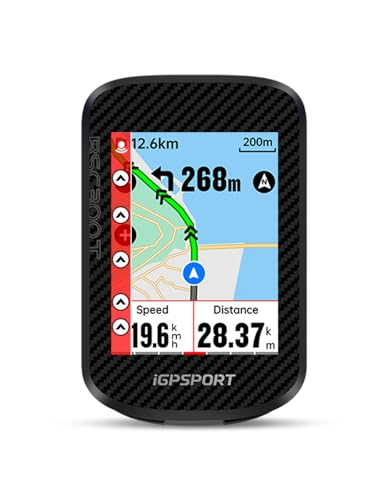
The BSC300T offers a 2.4 inch touchscreen with six buttons, enabling flexible navigation across road, MTB, and e-bike modes. It supports offline map navigation and a touchscreen alongside physical controls for easy operation. Its multi-satellite support (GPS, Beidou, GLONASS, GALILEO, QZSS) accelerates positioning accuracy. This model is ideal for riders who want on-device navigation with a modern interface and the ability to operate without constant phone connectivity.
iGPSPORT BSC200S GPS Bike Computer

The BSC200S focuses on route navigation and smart notifications within a compact package. It supports route creation via the iGPSPORT app or third-party platforms such as Strava, ride with GPS, and Komoot. One-touch navigation simplifies sending routes to the device, and the system supports back-to-start navigation for loop rides. It also provides turn reminders, yaw reminders, and call/SMS/app notifications, elevating road riding with practical, on-device guidance for those who prefer phone-free navigation.
Buying Guide: Key Purchase Considerations
- GPS and satellite support: Look for models with multiple satellites (GPS, Beidou, GLONASS, Galileo) for faster, more reliable positioning, especially in urban canyons or wooded routes.
- Sensor ecosystem: If you use a heart rate monitor, power meter, or cadence sensor, choose a device with ANT+ compatibility to ensure seamless data integration.
- Display and readability: A bright, glare-resistant screen with backlight helps during day and night rides. Screen size impacts readability and information density.
- Navigation capabilities: For guided routes, consider devices with route import options (GPX, Strava, Komoot) and on-device navigation. Touchscreen versus button controls affect ease of use while riding.
- Water resistance and durability: IPX ratings indicate rain resistance. Road riding can expose devices to splashes or spray, so a robust build is beneficial.
- Battery life: Extended battery life minimizes the need for frequent recharges on long trips. Look for models with large capacity or efficient power management.
- Mounting and compatibility: Ensure the device uses a compatible mount and supports easy installation on your handlebars, with secure, vibration-resistant mounting for fast-paced road riding.
- Firmware updates: Devices with straightforward firmware updates help maintain GPS accuracy and feature availability over time.
- Ease of setup: Smartphone apps for quick pairing and route loading can save setup time and improve data reliability, especially if you switch between bikes frequently.
- Value and intended use: Entry-level models focus on essential stats, while higher-end units emphasize navigation and sensor integration. Match features to your training goals.
Bike computers for road bikes provide vital data to optimize pacing, training, and navigation. By evaluating GPS accuracy, sensor compatibility, display clarity, and navigation options, you can select a model that fits your routes, training plans, and riding style. The five products covered here illustrate a spectrum from basic, reliable measurements to advanced navigation and connected features, helping you ride with better information and confidence on every road.