For effective rehab and gentle, consistent training at home, a physical therapy exercise bike can be a versatile ally. The following selections emphasize low-impact movement, adjustable resistance, and user-friendly designs that support arm, leg, and full-body recovery. Each option is suitable for seniors, those undergoing physical therapy, or anyone seeking a practical, compact workout tool.
| Product | Brand | Key Features |
|---|---|---|
| Under Desk Bike Pedal Exerciser | MERACH | Multi-use with resistance bands, floor mat, MERACH app with training modes |
| Mini Exercise Bike, Under Desk Pedal Exerciser | himaly | Arm & leg exercise, adjustable resistance, LCD display |
| Electric Physical Therapy Exercise Bike | ROYAXING | Motorized, dual motors, adjustable resistance and height |
| Pedal Exerciser Bike For Seniors | Dskeuzeew | Full-body modes, resistance bands, stable non-slip design |
| RYGEO Pedal Exercise Mini Bike | RYGEO | Leg & arm cycling, portable, low resistance |
MERACH Under Desk Bike Pedal Exerciser

The MERACH under-desk pedal exerciser is designed for both arm and leg workouts. It supports table-top arm exercises and foot pedal pedaling from a chair, making it flexible for different rehabilitation routines. Included resistance bands expand upper-body training, targeting multiple arm muscles. A protective floor mat helps prevent friction damage and keeps the unit in place during use. The device pairs with the MERACH app, offering modes such as free, target, and timed training, with live metrics to monitor progress.
Himaly Mini Exercise Bike
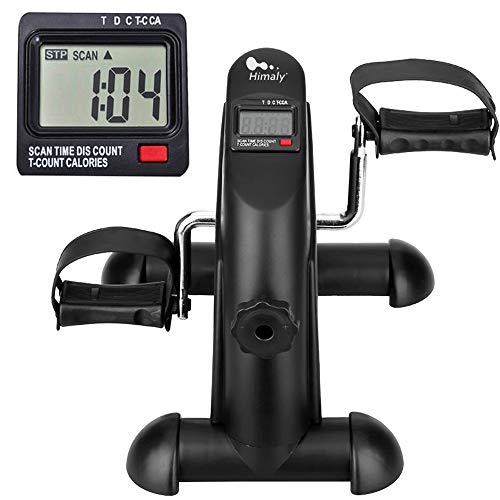
The Himaly under-desk bike provides both arm and leg cycling with adjustable resistance to suit different training stages. The compact pedal exerciser is compatible with home and office use, allowing exercise while watching TV or working. A digital LCD display tracks time, count, calories, and distance, with a scan feature cycling through measurements for easy progress tracking. Its straightforward design suits beginners and those seeking a low-impact regimen.
ROYAXING Electric Physical Therapy Exercise Bike

This motorized rehab bike offers 20 adjustable speeds with an LCD touchscreen to monitor workout stats. It supports low-impact arm and leg exercises, enabling either synchronized or separate upper-lower body training. Two independent 60-watt motors provide forward and reverse functionality for comprehensive rehabilitation, while 15 resistance levels and a height-adjustable frame (up to 36 inches) ensure a comfortable fit for various users. A leg support adds stability during sessions.
Dskeuzeew Pedal Exerciser Bike

The Dskeuzeew model delivers a full-body routine that includes arm, leg, and knee training, with resistance bands featuring foam handles for comfort. The unit is designed for two-person use and emphasizes stability with a heavy-duty frame and anti-slip feet to protect floors. Adjustable tension and height allow workouts from a chair or sofa, providing a safe, low-impact option for diverse body types and rehab needs.
RYGEO Mini Pedal Exercise Bike

The RYGEO pedal bike targets leg and arm movement with a design focused on portability and simplicity. It is suitable for use at home or in the office, including under-desk pedaling. The device provides low to moderate resistance, making it a convenient option for light rehab, post-surgery recovery, and ongoing mobility work without requiring a large footprint.
Buying Guide
- Intended use: Determine whether you need arm-focused, leg-focused, or full-body workouts. Some models emphasize portability and desk-use, while others offer motorized resistance and leg support for more intensive rehab.
- Resistance and adjustability: Look for adjustable resistance levels and height adjustments to match your current mobility, strength, and rehab plan. More levels expand suitability across users.
- Display and tracking: LCD or touchscreen displays help track time, distance, calories, and repetitions. A device with live metrics or a companion app can enhance motivation and progress monitoring.
- Stability and safety: A stable frame, anti-slip feet or suction cups, and secure straps reduce the risk of movement during exercise, which is essential for rehabilitation and seniors.
- Portability and footprint: If space is limited or you plan to move the device between rooms, choose a compact model with a light frame or built-in transport options.
- Multi-use capabilities: Some units pair arm and leg work with resistance bands or have adjustable configurations that enable a broader rehab routine, potentially replacing multiple devices.
- Maintenance and warranty: Consider ease of assembly, durability of components, and warranty coverage to protect your investment during the rehab period.
- User suitability: Check the weight limit, height range, and any therapy-specific features (like leg supports or reverse motion) to ensure compatibility with your rehab goals.
- Accessibility: Models with large, easy-to-read displays and simple one-button controls tend to be more user-friendly for older adults and those with limited dexterity.
When selecting a physical therapy exercise bike, prioritize safe, low-impact motion, adjustable resistance, and compatibility with your rehab timeline. A device that supports multiple training modes—arm, leg, and combined exercises—can provide a comprehensive home rehabilitation solution while remaining adaptable to changing mobility needs.