Embarking on rugged trails demands equipment built for durability, power, and control. This guide highlights top off-road options that deliver reliable performance across varied terrain, from dirt paths to rocky inclines. The selections below blend compact gas-powered mini bikes with accessible reference books to help riders of different ages and skill levels. Each entry includes core features to compare grip, endurance, and maintenance needs, empowering you to choose the best ride for your next outdoor adventure.
Summary of chosen products:
| Product | Brand | Key Feature |
|---|---|---|
| FRP 99 CC Gas Powered Mini Dirt Bike GMB100 | FRP | 4-stroke, up to 24 mph, low-maintenance oil needs |
| FRP Mini Dirt Bike GMB100 Basic | FRP | Up to 28 mph, no oil mixing, solid weight support |
| Motocross & Off Road Performance Handbook | Motorbooks | Technical reference for off-road riding and maintenance |
| Mountain Biking the San Francisco Bay Area | Rowman & Littlefield Publishers | Regional guide to rugged trails and rider-friendly routes |
| VEVOR Bike Cargo Trailer | VEVOR | Heavy-duty transport for gear and equipment on trips |
FRP 99 CC Gas Powered Mini Dirt Bike GMB100

The FRP GMB100 combines a compact 99cc four-stroke engine with features designed for off-road reliability. A rechargeable LED headlight improves visibility in low-light conditions, and an included neck gaiter provides extra protection during long rides. The bike is recommended for riders aged 13 and up and supports up to 185 pounds. It delivers up to 24 mph on shared fuel capacity, with an emphasis on straightforward operation and durable construction. Oil use is simplified with a recommended single-viscosity setup for heavy loads and heat. The starting process is designed to be simple, typically requiring three pulls on the recoil starter.
Key considerations:
– Power delivery is suitable for younger riders and light trails, with emphasis on ease of use and safety features.
– Fuel and oil approach requires attention to oil type (15W-40 high-viscosity oil) for optimal performance under load.
– Limited range per tank means riders should plan longer trail rides accordingly and carry spare fuel if necessary.
FRP Mini Dirt Bike GMB100 Basic (Red)
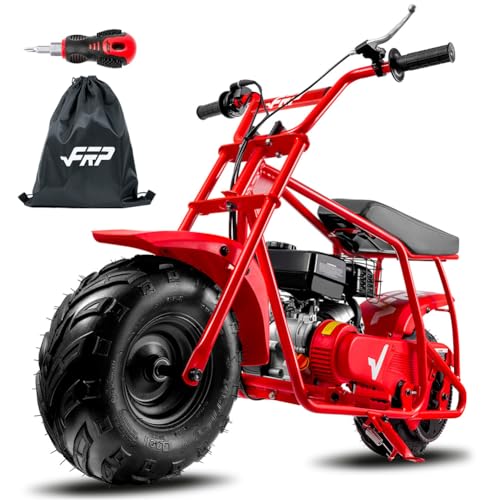
This FRP model emphasizes stronger power with a 99cc four-stroke engine, offering up to 28 mph top speed and a weight limit of 220 pounds. It uses an oil system that avoids mixing oil with gas, simplifying maintenance for riders who want a straightforward setup. The bike includes a rear disc brake and an EPA-compliant design. A reliable chain-tensioning system helps maintain optimal chain alignment during varying loads, reducing the risk of derailment on uneven terrain. Overall, it targets riders seeking higher performance within a compact frame.
Key considerations:
– Higher top speed and weight capacity broaden trail options, including steeper or more technical sections.
– Proper chain tension and maintenance become more important with aggressive riding.
– The model emphasizes user-friendly operation while delivering added performance on rugged routes.
Motocross & Off Road Performance Handbook

This handbook from Motorbooks serves as a technical reference for enthusiasts pursuing off-road performance. The content covers bike handling, setup, maintenance, and tuning strategies tailored to motocross and dirt-track conditions. While not a vehicle, the book provides practical guidance to optimize traction, suspension, and control on challenging trails. It is useful for riders seeking a deeper understanding of how to tailor their bikes and riding style to specific environments and demands.
Key considerations:
– Educational value for riders upgrading skills and vehicle setup.
– Useful companion to practical experience on dirt trails.
– Aimed at readers who prefer structured, technical guidance alongside riding practice.
Mountain Biking the San Francisco Bay Area

This regional guide from Rowman & Littlefield offers insight into rugged bike-friendly trails around the San Francisco Bay Area. While it’s broader than motocross, it helps riders plan off-road excursions with an emphasis on terrain variation, accessibility, and safety considerations for local routes. It can be a valuable resource for riders seeking to expand beyond standard dirt paths and explore challenging, scenic landscapes with appropriate gear and preparation.
Key considerations:
– Route selection, trail difficulty rating, and local conditions are covered.
– Helps riders align bike capabilities with trail profiles in a specific region.
– Useful for planning multi-trail trips or learning more about terrain strategies before tackling challenging sections.
VEVOR Bike Cargo Trailer

This heavy-duty bicycle trailer offers significant load capacity and a wide cargo area, making it a practical accessory for transporting gear on longer off-road trips. Its carbon steel frame and powder-coated finish enhance durability, while 20-inch wheels and a spring suspension contribute to stability on uneven terrain. For riders who frequently combine bikes with camping or multi-day excursions, a reliable trailer can simplify gear transport and trail logistics.
Key considerations:
– Evaluate payload needs against the trailer’s 71 lbs (approx. 32 kg) capacity.
– Consider compatibility with the bike models you own and whether a trailer-suitable hitch is required.
– Suspension and wheel setup influence stability on rough surfaces and while turning with cargo.
Buying Guide: Off-Road Trail Bike Purchase Considerations
- Intended use and rider level:match engine size and top speed to your riding experience; smaller engines suit beginners or younger riders, while larger engines support more challenging trails and heavier riders.
- Powertrain and maintenance: assess whether a 4-stroke, oil-muel-free mixing, or EPA-friendly setup aligns with your maintenance preferences and local regulations.
- Weight capacity and rider height: ensure the bike can safely support your weight and that the seat height and controls fit your body proportions for comfortable control.
- Fuel efficiency and range: consider fuel capacity and mileage to gauge how far you can ride before refueling on longer trail excursions.
- Safety features: look for headlight, reflectors, and reliable braking systems; check for available protective gear like neck gaiters or helmets that complement off-road safety.
- Durability and parts availability: evaluate build quality, chassis protection, and the availability of replacement parts or service centers in your region.
- Trail policy and legal considerations: confirm whether the vehicle meets local noise and emission regulations for off-road use on designated trails.
- Accessories and compatibility: consider optional gear such as trailers or cargo racks to support longer trips or multi-day outings.
In summary, the listed products cover a spectrum from compact, entry-level mini bikes to technical references and trail planning resources. When selecting an off-road trail bike, balance power, safety, maintenance needs, and how you plan to use the bike on varied terrain. This multi-item approach supports both immediate riding needs and longer-term improvement through knowledge and planning.