Fat tire mountain bikes expand your terrain options, offering extra stability and traction on sand, snow, mud, and rough trails. This guide highlights top fat-tire models available on major retailers, focusing on build quality, braking systems, gearing, and ride comfort. Each entry includes practical details to help you compare performance, sizing, and durability for American riders seeking versatile year-round capability.
Buying at a glance: the following table summarizes five notable fat tire bikes, with core specs to compare quickly. Use this as a quick reference when browsing product pages.
| Product | Wheels | Brakes | Frame | Gear Range |
|---|---|---|---|---|
| Mongoose Argus ST Fat Tire Mountain Bike | 26-Inch | Mechanical Disc Brakes | Steel Hardtail | 7-Speed |
| Mongoose Dolomite Fat Tire Mountain Bike | 26-Inch | Front & Rear Mechanical Disc Brakes | Steel Frame | 7-Speed |
| Max4out Fat Tire Mountain Bike | 26-Inch | Dual Disc Brakes | High-Carbon Steel | 21-Speed |
| ZDZA Electric Fat Tire Mountain Bike | 26-Inch | Dual Disc Brakes | Aluminum/Carbon Blend | 7-Speed + Electric Assist |
| MarKnig 26 Inch Fat Tire Mountain Bike | 26-Inch | Dual Disc Brakes | High Carbon Steel | 21-Speed |
Mongoose Argus ST Fat Tire Mountain Bike
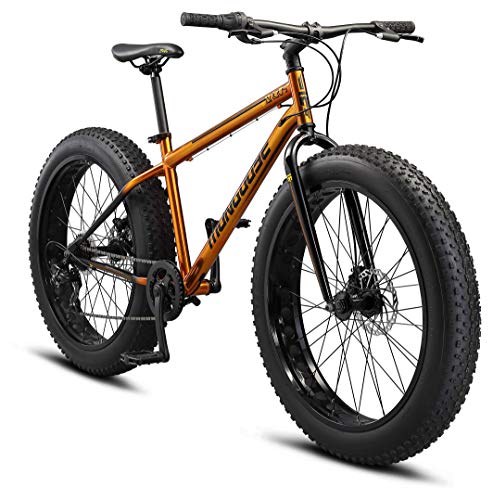
The Argus ST combines a rugged steel hardtail frame with 26-inch fat tires designed to roll over challenging terrain. Sized for riders roughly 5’7″ to 6’1″, this model emphasizes a sturdy build that handles off-road obstacles with confidence. The 4-inch-wide knobby tires provide substantial grip across sand, snow, and loose gravel, helping riders maintain control on unpredictable surfaces. A rigid fork complements the drivetrain, while drilled aluminum rims help keep weight manageable for daily use.
Key features include a dependable steel frame and a 7-speed setup that supports casual cruising and moderate climbs. While not a premium lightweight build, the Argus ST focuses on durability and stability, making it a practical entry point for riders new to fat tires or those who prioritize a confident feel over sprinting performance.
Riders should consider comfort for longer sessions, and may opt for a seat upgrade or cushioned handlebars if needed. Steel frames can be heavier than alloy alternatives, but they absorb trail impacts effectively, contributing to ride feel on rough terrain.
Mongoose Dolomite Fat Tire Mountain Bike
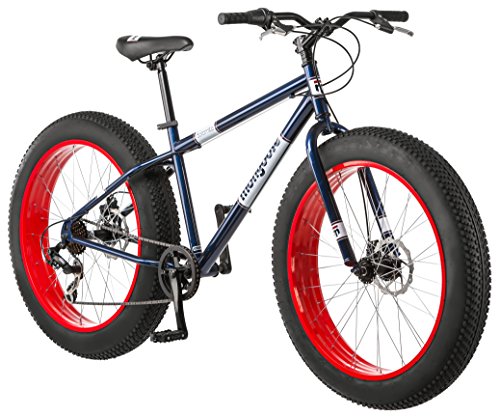
The Dolomite model targets a broad range of riders with a 26-inch wheel configuration and 4-inch wide knobby tires. Its steel frame supports riders from about 5’4″ to 6′ tall, with a design that emphasizes reliable off-road performance across varied terrains. The bike’s threadless headset contributes to easy maintenance and smoother steering, while strong alloy rims help keep overall weight in check. Front and rear mechanical disc brakes enhance stopping power in mixed conditions, promoting rider safety on loose surfaces or damp trails.
With a 7-speed drivetrain, the Dolomite balances simplicity and capability, offering straightforward gear changes for different gradients. Ergonomic considerations and frame geometry aim to deliver stable handling for riders stepping into fat-tire adventures. As with other steel-framed bikes, expect a sturdy, long-lasting option suitable for daily commuting and weekend trail rides alike.
Potential buyers should note that the steel frame adds weight compared with aluminum or carbon composites. Regular maintenance, including brake and drivetrain checks, is recommended to preserve performance across seasons.
Max4out 26 Inch Fat Tire Mountain Bike

The Max4out fat-tire model is built around a high-carbon steel frame designed for strength and durability. Its 26-inch wheels pair with 4-inch knobby tires to provide traction on loose terrain. The bike features a front suspension fork intended to absorb bumps and improve ride comfort, particularly on rough gravel or dirt trails. A 21-speed drivetrain enhances acceleration, hill climbing ability, and overall versatility for varied routes.
Construction emphasizes a balance between rugged performance and practical weight. The front suspension helps soften impact without compromising control, while the reinforced frame design supports riders of different sizes and weights. Drivetrain versatility allows riders to tailor effort to terrain, though steep, technical climbs may still demand stamina and technique.
Potential buyers should consider if a 21-speed system is aligned with their preferred riding style. Maintenance access and component compatibility are common considerations for modular upgrades in this class of bike.
ZDZA Electric Fat Tire Mountain Bike

The ZDZA electric fat-tire bike pairs a four-inch-wide front with a robust 1500W peak motor to deliver up to 28 mph top speed. The dual-suspension design supports smoother riding on varied surfaces, and the 48V removable battery provides practical range, cited as up to 40 miles in electric mode and 72 miles in pedal-assist mode. The 26″x4.0″ fat tires further enhance stability and shock absorption, enabling confident rides on snow, sand, rocky trails, and urban terrain alike.
With a seven-speed drivetrain as part of the system, riders can adapt to hills and flats while relying on electric assistance for longer rides. The balance between power and range makes this bike a compelling option for commutes, weekend adventures, and exploration in mixed weather.
Considerations for buyers include battery life expectations, charging options, and the availability of spare parts or service within their region. Electric-assist systems add weight and maintenance needs compared to non-electric fat bikes.
MarKnig 26 Inch Fat Tire Mountain Bike

The MarKnig fat-tire bike features a sturdy high-carbon steel frame and 4-inch knobby tires designed to tackle off-road conditions. Suitable for a broad rider height range (roughly 5’5″ to 7’3″), the bike emphasizes traction and control in gravel, mud, and sand. A 21-speed drivetrain enables efficient gear selection for diverse surfaces, from flat stretches to inclines, while dual disc brakes offer reliable stopping power in wet or dusty conditions.
Ergonomic considerations include ride comfort over longer sessions and the durability of components exposed to outdoor elements. The frame’s build supports substantial rider weight, and the wide tires contribute to stability at lower speeds. Regular maintenance, such as brake alignment and wheel truing, helps maintain performance across seasons.
Buying Guide: Key Purchase Considerations and Comparisons
- Terrain compatibility: Fat tires excel on sand, snow, mud, and rocky trails. Consider the tire width and tread pattern most suitable for your typical riding conditions.
- Frame material and weight: Steel frames offer durability and shock absorption but add weight. Aluminum frames save weight and can improve agility, while carbon fiber is more premium and lighter but less common in entry-level fat bikes.
- Drivetrain options: 7-speed setups are straightforward for casual riders; 21-speed systems provide broader gearing for hills. Electric-assisted models add power, range, and complexity.
- Braking system: Disc brakes (mechanical or hydraulic) deliver consistent stopping power in varied weather. Dual disc brakes generally offer superior performance on fat bikes.
- Suspension: Front suspension helps with rough terrain comfort; full suspension adds weight and cost but improves grip on technical trails.
- Wheel and tire sizing: Most fat bikes use 26-inch wheels; ensure tires have adequate width (3.8–4.0 inches or more) for stability on soft surfaces.
- Fit and sizing: Fat bikes require proper frame sizing to maximize control. Check rider height ranges and standover clearance for comfort and safety.
- Maintenance considerations: Steel frames may require rust prevention; aluminum frames demand less upkeep. Electric variants need battery care and charging practices.
Across these options, evaluate your primary use—commuting, weekend trails, or snow-season rides—and balance budget with longevity, weight, and components. If you expect frequent off-road exploration, an upgraded braking system and a wider gear range can improve reliability and confidence. For lighter, casual use, a steel-frame model with a simpler drivetrain can be a cost-effective entry point.