Finding an exercise bike that combines robust performance with smart features can elevate any home workout. This guide highlights top models that pair solid build quality with digital coaching, app connectivity, and comfortable riding experiences. Each option is evaluated for stability, resistance precision, user comfort, and app compatibility to help you choose the right machine for your routines.
Summary of selected products
| Product | Brand | Key Benefit | Weight Capacity |
|---|---|---|---|
| Exercise Bike, Adjustable Magnetic Resistance Stationary Bike | SLUNSE | App compatibility, high stability | 350 lbs |
| Recumbent Exercise Bike for Home | Birdfeel | Ergonomic comfort, quiet operation | 400 lbs |
| YOSUDA Exercise Bike | YOSUDA | Reliable belt-drive, smooth ride | 300 lbs |
| MERACH Exercise Bike | MERACH | App connectivity, quiet cycling | 300 lbs |
| pooboo Magnetic Resistance Cycling Bike | pooboo | Strong frame, comfortable ride | 300 lbs |
Top Pick: Magnetic Resistance Home Bike With App Support

The SLUNSE Exercise Bike combines a sturdy 350-pound weight capacity with electronic integration that appeals to tech-minded athletes. It features a heavy-dut y aluminum-steel frame and a 35-pound flywheel for a stable ride, while a pair of 7-shaped brake knobs offer precise manual resistance. Its design emphasizes a balanced center of gravity and non-slip feet for maximum stability on varied flooring. App compatibility with popular fitness platforms enables interactive riding experiences, virtual routes, and a broader community engagement that can sustain motivation over weeks and months.
Key points include a 2-way adjustable handlebar and a 4-way adjustable seat, accommodating riders from about 4’8″ to 6’1″. The seat uses a high-rebound cushion to reduce fatigue during longer sessions, and aluminum alloy pedals with adjustable straps enhance safety. The combination of smart connectivity, robust construction, and comfortable ergonomics makes this model a versatile choice for home cardio, interval training, and steady-state workouts.
Pros: Stable frame, strong weight capacity, app-enabled training, comfortable seating. Cons: Assembly may require careful alignment due to its sturdy build. This bike is well-suited for users who value interactivity alongside durable performance.
Quiet Recumbent Bike With High Capacity

The Birdfeel Recumbent Bike emphasizes comfort and long-term usability with an ergonomic padded seat and backrest. Its design accommodates a wide range of heights by allowing seat slide and fore-aft adjustments, making it ideal for multi-user households. A whisper-quiet magnetic resistance system, aided by a substantial 10-pound flywheel, ensures smooth operation with minimal noise. The frame is built from commercial-grade steel and supports up to 400 pounds, delivering sturdy performance for diverse user needs, including rehabilitation and steady cardio routines.
Setup is streamlined, with the bike arriving around 85% assembled, and transport wheels simplify moving the unit between rooms. The combination of comfortable ergonomics, quiet operation, and easy relocation positions this recumbent bike as a practical option for seniors and users prioritizing joint-friendly workouts or reduced upper-body strain.
Pros: High weight capacity, easy adjustability, quiet ride. Cons: Recumbent positioning may feel less aggressive for high-intensity interval users. Best for comfort-focused workouts and shared households.
YOSUDA Belt-Drive Bike With Durable Build

YOSUDA positions itself as a trusted name in home cardio with a 30-pound flywheel and a heavy-duty steel frame that ensure ride stability. The belt-drive mechanism contributes to a smoother, quieter operation compared with chain drives, helping to maintain focus during workouts. The bike supports up to 300 pounds and includes adjustable cage pedals and an easily accessible resistance bar for immediate stopping and safety during intense sessions. The overall feel is dependable and user-friendly, making it a strong candidate for daily cardio, endurance rides, and seated workouts.
Pros: Quiet, smooth ride; reliable weight capacity; straightforward adjustments. Cons: Fewer advanced smart features than some rivals. Ideal for households seeking a durable, low-maintenance bike with solid everyday performance.
MERACH Bike With App Connectivity

MERACH pairs a self-developed app ecosystem with Bluetooth connectivity, enabling real-time metrics such as distance, time, calories, and heart rate. Compatibility with Kinomap and Zwift broadens the range of virtual training options, and data syncing with Google Fit and Apple Health helps consolidate workout history. The bike uses a belt-driven system designed to minimize noise, with an infinite resistance range that supports detailed performance progression. An upgraded electronic LED monitor tracks essential stats for users who prefer digital feedback during workouts.
Pros: Rich app integration; quiet operation; comprehensive performance tracking. Cons: More features may require regular app updates. Suitable for data-driven users who enjoy virtual riding and cross-platform health syncing.
Pooboo Magnetic Bike With Comfortable Cushion
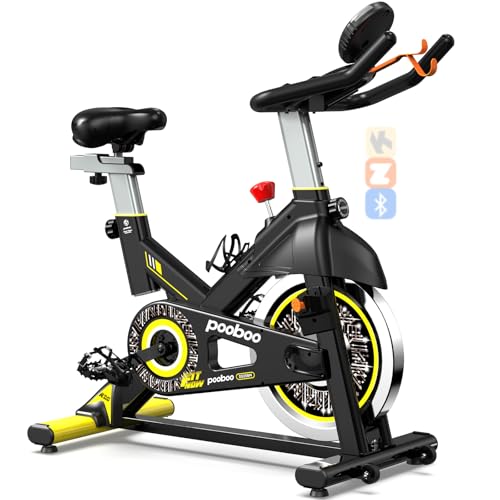
Pooboo emphasizes a sturdy build and a comfortable ride with a thick steel frame and a 30-pound flywheel. The belt-driven system provides a smooth, quiet experience suitable for apartment living. The dual-triangle frame design enhances stability during vigorous workouts, ensuring a secure session even at higher resistance levels. The unit supports up to 300 pounds, making it a solid choice for standard home cardio programs and weight-management routines. It includes an iPad mount for entertainment and a cushioned seat to reduce fatigue on longer rides.
Pros: Stable, quiet, and comfortable; good value for the price. Cons: Lacks advanced app ecosystem found on some competitors. Ideal for users who want a dependable, low-maintenance bike with comfort-oriented features.
CHAOKE Quiet Magnetic Bike With App Link

CHAOKE offers a 2025 upgraded model that emphasizes app compatibility with Kinomap for virtual training, racing, and global challenges. The frame employs 2.00mm thick steel and robust manufacturing processes for long-lasting durability, reinforced by electroplating rust protection. Magnetic resistance delivers a smooth, silent ride that minimizes wear. The design focuses on stability with a solid H-shaped structure, helping to prevent tipping during intense intervals. A digital display provides essential workout metrics, supporting users who prefer concrete feedback to guide progression.
Pros: Strong app compatibility and stability; quiet operation. Cons: Higher emphasis on app features may be excessive for basic users. Best for athletes who want interactive training and durable build.
Buying Guide: Key Purchase Considerations
- Intended use: If you prioritize velocity and interval training, choose a bike with a large flywheel, precise resistance, and a stable frame. For seniors or joint-sensitive users, recumbent models offer comfort and ease of access.
- App and data integration: App compatibility can significantly boost motivation through guided workouts, virtual routes, and cross-platform health tracking. Verify which apps are supported and how data sync works with your ecosystem (iOS, Android, Google Fit, Apple Health).
- Weight capacity and stability: Heavier riders benefit from reinforced frames, wide base design, and high-quality pedals. Look for models with a robust frame, non-slip feet, and secure seat/handlebar adjustments.
- Comfort and ergonomics: Seat cushioning, adjustability (seat fore-aft, handlebar reach), and pedal straps influence long workout adherence. Consider seat shape and padding for your body type and preferred workout duration.
- Noise level: Belt-drive systems tend to be quieter than chain drives, which matters for apartment living or shared spaces. Noise considerations are especially important for early morning sessions.
- Maintenance and assembly: Some bikes arrive partially assembled; others require more setup. Check the hardware quality, warranty coverage, and ease of replacement parts when evaluating total cost of ownership.
- Space and foldability: If you have a small workout area, consider foldable or compact models with a small footprint to keep your space open when not in use.