Looking to convert your mountain bike into an electric ride, quickly and reliably? This guide showcases five top Amazon conversion kits suited for mountain bikes, explaining who each kit is best for and why. Each section highlights key features, compatibility notes, and practical buying tips to help you choose. The listed options cover mid-drive and rear-hub designs, different power levels, and varying installation complexities.
Comparison at a Glance
| Product | Motor Type | Best For | Notes |
|---|---|---|---|
| LYNICESHOP 350W Hub Kit | Rear hub | Budget builds, common bikes | Battery not included |
| BAFANG BBS02B/BBS-HD Mid-Drive Kit | Mid-drive | All-terrain, DIY enthusiasts | Battery and display optional |
| DDYOOK 1000W Rear Wheel Kit | Rear hub | Powerful rear-wheel upgrade | Dual mode controller with LCD |
| CUBELLIN 2000W Rear Hub Kit | Rear hub | High-performance builds | 72V system; 9 speeds |
| Helrgelrn 1000W Rear Wheel Kit | Rear hub | Long-distance commuting | Includes LED display |
The best choice depends on your goals: power and hill-climbing ability, ride feel, battery integration, and how involved you want the installation to be. The following sections break down each product to help you select the right kit for your mountain biking needs.
LYNICESHOP 350W Hub Kit

The LYNICESHOP kit uses a front- or rear-hub motor design with a compact 350W output, aimed at riders seeking an affordable, straightforward upgrade. It fits hubs with a diameter under 36mm and does not include a battery or charger. Best for casual riders who want occasional electric assistance on light trails or urban climbs. It’s a simple install for bikes already comfortable with spoke-wheel mounting since the kit mounts the sprocket on the wheel spokes. Caution: the lack of a battery means you’ll need to source a compatible pack separately, which can affect total cost and weight balance.
Who it’s best for: riders on a tight budget who want a no-frills conversion and already own a compatible battery, or who only ride occasionally with assist. It’s less ideal for aggressive trail riding due to modest power and the absence of an integrated charging setup.
Why selected: affordability, straightforward wheel-spoke mounting, and compatibility with common bike frames that accept 36mm hub diameters.
BAFANG BBS02B/BBS-HD Mid-Drive Kit

This mid-drive kit is designed to mount in the bottom bracket area and works with 68-73mm (and other lengths) frames. It’s compatible with 33.5-36mm inner diameters and disc or V-brake equipped, chain-driven bikes. It offers adjustable power levels (500W/750W/1000W) and torque up to 160 N.m in the highest configuration. You can optionally include a battery and LCD display. Best for capable riders who want strong hill-climbing performance and a natural-feeling pedal assist, especially on MTBs and mixed-terrain riders.
Who it’s best for: riders who want a robust, tunable mid-drive that leverages the bike’s gears for efficient climbing and on-road speed. It’s a strong choice for enthusiasts who don’t mind assembling more components or selecting compatible accessories.
Why selected: high torque, versatile frame compatibility, and the option to scale power with your riding style.
Caution: screws for 73mm bottom brackets may not be included, so verify hardware needs for your frame before purchase.
DDYOOK 1000W Rear Wheel Kit

This 1000W rear-hub kit offers a dual-mode controller with an LCD display and a 5-speed adjustment via the controller. The motor’s high power supports quicker acceleration and strong hill performance, making it suitable for riders who value speed and robust assistance on mountain grades. Best for riders who want a powerful upgrade without changing the bike’s drivetrain layout significantly.
Who it’s best for: riders seeking substantial assistance for steep climbs or rapid acceleration, with a straightforward rear-wheel install.
Why selected: strong rear-hub power, user-friendly display, and a complete controller setup that supports clear on-bike readouts.
Caution: rear-hub configurations can affect wheel stiffness and braking feel on rough trails; ensure your wheel is prepared for higher torque loads.
CUBELLIN 2000W Rear Hub Kit
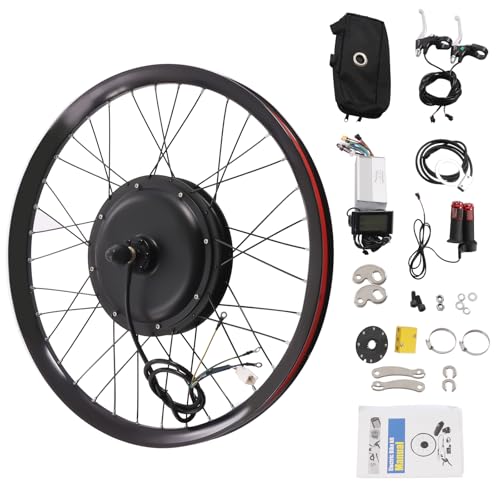
The CUBELLIN kit uses a high-powered 72V system with a 2000W rear hub motor and 9-gears, designed for serious performance. The kit emphasizes durability with aluminum motor wheel rims and claims higher torque at 60 N.m, suitable for steep terrain and rapid accelerations. It is positioned for riders who want substantial off-road capability and are comfortable with higher voltage configurations.
Who it’s best for: ambitious riders who need maximum torque and can manage the electrical system’s complexity, including safe handling of higher voltage. It suits aggressive climbs and fast trail riding.
Why selected: unmatched power within the rear-hub category and a durable build intended for demanding riding conditions.
Caution: higher voltage systems require careful wiring, appropriate battery selection, and compatibility checks with bike components.
Helrgelrn 1000W Rear Wheel Kit

The Helrgelrn rear wheel kit features a 1000W motor, a built-in LED display, and standard PAS options to balance pedal-assist with throttle control. It emphasizes a reliable, energy-efficient ride with a focus on daily commuting and mixed-terrain riding. Best for riders who want a balance between power and a straightforward installation with on-bike readouts for monitoring.
Who it’s best for: commuters and weekend riders who need dependable assistance without complex setup or maintenance. The included LED display aids in real-time monitoring of speed and battery usage.
Why selected: practical power for mountain rides, clear on-bike data, and a design that suits variable terrain.
Buying Guide: Key Considerations for Ebike Conversion Kits
- Power and torque needs: Mid-drive kits provide efficient use of gears and strong hill-climbing ability, while hub motors offer a simpler install and direct drive. Choose power based on terrain, weight, and desired top speed.
- Wheel compatibility: Check dropout width, hub diameter, and frame compatibility. Some kits are frame-specific (bottom-bracket or hub-based), while others are universal with adapters.
- Battery integration: Decide whether to source a battery separately or as part of a bundle. Battery weight affects handling and center of gravity; consider capacity for range needs.
- Display and controls: LCD displays and PAS options influence ride experience and battery management. Ensure the display is readable in sunlight and easy to navigate.
- Installation skill level: Mid-drive kits are typically more complex and require tools and mechanical know-how, while hub kits can be more straightforward but still demand careful wheel alignment.
- Brakes and frame gearing: Some kits require disc brakes or certain frame configurations. Verify compatibility with your current drivetrain and braking system.
- Maintenance and reliability: Look for sealed components, weather-rated hardware, and availability of replacement parts and consumables.
FAQ
- Will these kits fit my bike? Most kits specify compatible frame types, hub diameters, dropout widths, and bottom-bracket measurements. Confirm these dimensions against your bike before purchase.
- Do they require professional installation? Some kits are DIY-friendly with basic mechanical skills, while mid-drive kits may require more advanced tools and steps. Consider professional help if unsure.
- Can I ride without power? Yes. Most systems operate as conventional bikes when the motor is not engaged, preserving normal riding without assistance.
- Will these affect my brakes and gearing? Yes, especially high-power kits. Ensure your brakes are capable of handling increased speed and torque, and verify drivetrain compatibility with the kit.
- Do these kits come with batteries? Some options include batteries as an optional upgrade; many require you to source a battery separately based on voltage and capacity needs.
- Is a high-voltage kit suitable for all terrains? High-voltage and high-torque kits excel on steep hills and rugged trails but require careful circuit and component matching to ensure reliability and safety.