Choosing the right disc brake rotors can impact braking consistency, heat management, and overall control on different terrains. This guide highlights five of the most relevant disc brake rotors for bikes, covering road, mountain, BMX, and hybrid setups. Each selection considers size options, compatibility, and build quality to help riders find dependable performance across conditions.
| Product | Brand | Diameter | Notes |
|---|---|---|---|
| Teyssor 180 mm Rotors (6-bolt) | Teyssor | 180 mm | Includes 6 bolts; versatile for MTB and road use |
| Teyssor 160 mm Rotors (6-bolt) | Teyssor | 160 mm | Includes 6 bolts; standard for many setups |
| Shimano SM-RT56 (160 mm) | Shimano | 160 mm | 6-bolt, anti-loosen plate |
| TEKTRO 24 Series (180 mm) | TEKTRO | 180 mm | 6-bolt, stainless steel |
| BUCKLOS 160 mm | BUCKLOS | 160 mm | 6 bolts; multiple sizes available |
Teyssor 180 mm Disc Brake Rotor with 6 Bolts

The 180 mm rotor from Teyssor is designed for a broad range of bikes, including road, mountain, BMX, and MTB configurations. The package includes the rotor and six screws, with a precise outside diameter of 180 mm and a center distance of 44 mm. This size is common for riders seeking stronger stopping force on more demanding trails while maintaining compatibility with six-bolt hubs. The stainless steel construction provides durability and resistance to heat-induced warping, helping to maintain consistent braking performance under repeated braking cycles.
For riders upgrading from smaller rotors or matching multiple bikes with a standard 44 mm center distance, this rotor offers a straightforward swap. The included hardware reduces the chance of misalignment during installation, and the 180 mm diameter is a versatile choice for riders who require more bite without sacrificing rotor weight excessively. As with any rotor, ensure your caliper and pad compound are suited to the rotor size to maximize stopping power and pad longevity.
Teyssor 160 mm Disc Rotor With Screws
This 160 mm rotor from Teyssor is suited for riders who prefer a lighter setup while maintaining reliable braking performance. The kit includes six bolts and specifies an outer diameter of 160 mm with a 44 mm center distance, aligning with many common road and mountain bike hubs. The 160 mm size can offer improved modulation on lighter bikes or wheels with tighter geometries, especially when paired with compatible calipers and pads that emphasize control over raw bite. If you ride multiple bikes, this size is a practical choice for a universal upgrade.
Quality stainless steel construction helps resist wear and corrosion, while the standard six-bolt pattern allows easy installation. When selecting rotors, consider your typical terrain and brake pad compound—some riders prefer a slightly larger rotor for heat management on long descents, while others opt for smaller rotors for weight savings on XC bikes.
Teyssor 140 mm Disc Rotor
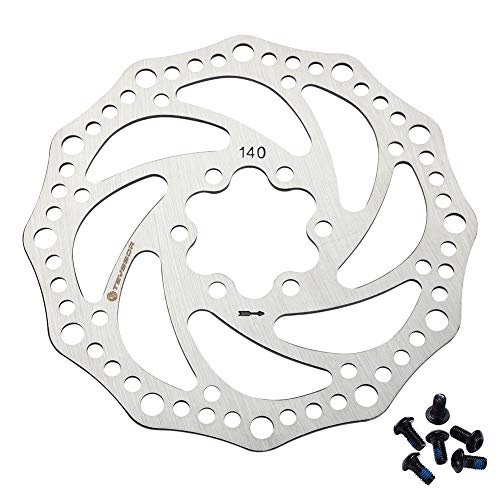
The 140 mm rotor option from Teyssor targets riders seeking a compact, lightweight configuration or specific compatibility with certain road or city bikes. The rotor’s outer diameter is 140 mm with a 44 mm center distance and six-bolt pattern, making it a suitable candidate for lighter frames where weight savings and quick heat dissipation matter. This size can enhance throttle-like modulation for beginners or riders who prioritize nimble handling on tight courses.
As with other rotors, ensure your brakes and pads are tuned for smaller diameters to avoid noise or inconsistent braking. A well-matched caliper and pad compound will help maximize the rotor’s potential, particularly in dry, controlled conditions or for cyclists who emphasize precision over raw braking force.
TEKTRO 24 Series 180 mm Rotor

The TEKTRO 24 Series rotor combines precision engineering with a robust 180 mm diameter and a universal 6-bolt mounting design. Constructed from stainless steel, this rotor aims to resist warping and corrosion, supporting longevity and consistent braking. The 1.8 mm thickness (as indicated for some TEKTRO models) contributes to durability while maintaining compatibility with a wide range of hubs and caliper setups. This rotor is well-suited for riders who demand dependable braking across varied weather and terrain.
6-bolt compatibility makes installation straightforward on most bikes, and the robust stainless steel build helps preserve performance after extended riding hours. When pairing with pads, consider a compound formula that complements rotor material to optimize bite and fade resistance, especially on steeper descents or muddy conditions.
BUCKLOS 160 mm MTB Rotor

BUCKLOS offers a 160 mm rotor designed for Mountain, Road, BMX, and MTB bikes, with six-bolt compatibility and a 44 mm center distance. The rotor features a reinforced stainless steel construction, emphasizing wear resistance and heat tolerance. The manufacturer highlights quick radiating vent design, which can help reduce deformation caused by friction-induced heat buildup during aggressive braking. For riders tackling mixed terrains, this rotor provides a balanced option between heat management and bite intensity.
Riders should assess rotor thickness and weight when building a lightweight race bike versus a trail-focused setup. Since it’s available in multiple sizes, it’s possible to tailor rotor choice to specific frames, calipers, and pad assortments to optimize braking consistency across long miles and varied descents.
Generic 160 mm Rotor with 6 Bolts

The Generic 160 mm rotor provides a solid, budget-friendly option for riders who want a reliable 6-bolt rotor without specialized branding. With an outer diameter of 160 mm, inner diameter of 44 mm, and a thickness of 2 mm, it fits a broad range of bikes, including MTB, road, and BMX. Steel construction promises durability, while the included hardware streamlines installation. This rotor is suitable for riders who want a straightforward upgrade or replacement rotor that maintains standard performance across common riding scenarios.
When adopting generic rotors, it’s important to confirm hub compatibility and ensure your calipers match the rotor’s dimensions for optimal pad contact. Pairing with a compatible pad compound and maintaining rotor cleanliness will help retain consistent stopping power across wet or dry conditions.
Buying Guide: Key Considerations for Disc Brake Rotors
- Rotor size: Larger diameters (e.g., 180 mm) offer more stopping power and heat management on steep or long descents but add unsprung weight. Smaller sizes (e.g., 140–160 mm) reduce weight and can improve modulation on lighter bikes or XC riding.
- Six-bolt vs center-lock: The products here use six-bolt designs, which are widely compatible and easier to service, though center-lock rotors are another common option with simplified installation on certain hubs.
- Material and construction: Stainless steel rotors resist warping, corrosion, and wear, providing durability in varied weather. Thicker rotors can handle heat better but weigh more.
- Heat management: Rotors with vented designs or optimized cooling patterns help reduce brake fade during sustained braking. Consider riding style and terrain when evaluating heat resistance.
- Pad compatibility: Rotor performance depends on pad compounds. Match pads to rotor material and riding conditions (resin vs metallic pads; cold vs warm climate).
- Hub alignment: Ensure center distance (often 44 mm) and bolt pattern align with your hubs and calipers to avoid rubbing or misalignment.
- Maintenance: Regular inspection for warping, grooves, or rust is essential. Clean rotors to maintain consistent braking, and replace pads when wear indicators appear.
- Bike type and use-case: Road bikes benefit from lighter rotors for efficiency, while MTB and downhill riders may prioritize larger diameters and heat resilience for consistent performance on long descents.
Selecting the right rotor involves balancing weight, braking power, heat management, and compatibility with calipers and hubs. For riders who navigate varied terrain or multiple bikes, having rotors in a few sizes (e.g., 160 mm and 180 mm) can provide flexible options to optimize braking feel and control across scenarios. Always verify compatibility with your specific crankset, hubs, and brake pads to achieve the best performance.