Choosing the right dirt BMX bike depends on rider age, skill level, and the type of riding you plan to do—street, park, dirt jumps, or casual neighborhood riding. This guide highlights five solid options that balance durability, simplicity, and potential for growth. The top picks cater to kids and teens from early elementary to preteen ages, with features that support learning basic tricks and progressing to more advanced stunts. The summary table below helps compare key points at a glance.
| Product | Best For | Frame Type | Key Benefit |
|---|---|---|---|
| Young riders new to freestyle | Hi-Ten steel | 360° rotor and 4 pegs for tricks | |
| Beginners to intermediate riders | Hi-Ten steel | Low-maintenance front and rear braking | |
| Young riders growing into freestyle | Hi-Ten steel | Beginner-friendly setup with upgrade path | |
| Versatile for multiple ages | Hi-Ten steel | Solid braking and quick assembly | |
| Older kids seeking motorized fun | Electric, 12″ wheels | Low-speed dirt riding with safety features |
WEIZE Freestyle BMX Bike 20 Inch
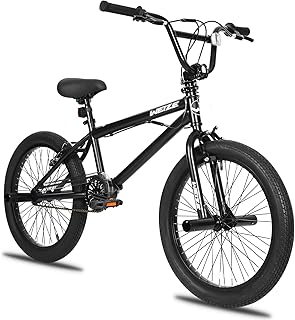
The WEIZE Freestyle BMX Bike is designed for ages 7–13, offering a 20″ wheel size that suits shorter riders who want to practice basic tricks in parks or neighborhoods. The 360-degree rotor reduces brake cable twist during spins, and four pegs increase trick options. The single-speed drivetrain keeps maintenance simple for beginners and intermediate riders. Best for riders developing freestyle skills while keeping setup straightforward.
Who it’s best for: younger riders who want to explore freestyle basics without complex gear shifts. Why selected: the rotor and pegs expand trick potential while keeping a manageable weight and low maintenance. Caution: ensure proper protective gear and supervision during first park sessions.
cubsala 20″/24″/26″ BMX Race Bike Trident

This cubsala model features a Hi-Ten steel frame designed for versatility and value, making it suitable for riders who want an affordable bike that can handle daily riding and some trick work. A linear pull V-brake on the rear wheel provides reliable stopping power with low maintenance. About 85% pre-assembled, it comes with free pedals and assembly tools, which helps families set up quickly. Best for: beginners who want an entry-level ride with easy setup. Caution: may require future upgrades as skill level increases.
KORIMEFA Freestyle BMX Bike 18″/20″

The KORIMEFA BMX bike suits riders aged roughly 6–9 years (18″) and 8–12 years (20″). It targets beginners aiming to learn basic freestyle tricks, with a robust carben steel frame for daily rides, parks, and dirt tracks. A simple rear caliper brake, chain guard, and reflectors emphasize safety and straightforward operation. Best for: early-stage freestyle learners who want durability and a clear upgrade path. Caution: lacks pegs or gyro in base configuration, which may affect early trick variety; upgrade later as skills grow.
cubsala 20″/24″/26″ BMX Race Bike (Second Listing)

The second cubsala listing emphasizes a Hi-Ten steel frame built for versatility and performance with a rear V-brake for dependable braking and easy maintenance. It is designed for riders who want a cost-effective bike that can handle learning curves and routine riding. Best for: riders who want a multi-size option with straightforward assembly. Limitation: base model may require future upgrades for advanced tricks.
Razor MX125 Dirt Rocket Electric-Powered Bike

The Razor MX125 is the electric option among the dirt bikes listed, scaled for children aged about 5 and up. It reaches speeds up to 8 mph in high-speed mode and includes a hand-operated rear brake, a crossbar-reinforced handlebar, and 12″ spoked wheels with pneumatic tires. Best for: older kids seeking motorized riding with safety controls. Caution: electric bikes require charger access and supervision; ensure appropriate protective gear and local usage guidelines.
Buying Guide: Key Purchase Considerations
What wheel size should I choose? For growing riders, 20″ wheels are common for beginners, with 18″ options for younger children transitioning to bigger bikes. Consider a model that can grow with the rider, including upgradeable pegs or accessories.
What braking system is best? Linear-pull V-brakes are low-maintenance and effective for learning. A single caliper brake setup can be sufficient for beginners, while more advanced riders may benefit from gyro-enabled systems and pegs for tricks.
Is the frame material important? Hi-Ten steel frames provide strength at a lower cost and are common in entry-level BMX bikes. Steel frames tolerate rough handling and jumps, but watch for weight considerations for lighter riders.
What about assembly? Many BMX bikes arrive partially assembled. Look for models advertised as 85% or more pre-assembled to reduce setup time and frustration for first-time bike owners.
Safety and growth: Choose a bike that fits now but offers room to evolve. Pegs, gyro, and reflectors add safety and trick potential. Plan for protective gear and a practice routine that prioritizes skill development over speed.
FAQ
- What size BMX bike is best for a beginner?
For most beginners, a 20″ wheel BMX is a good starting point for riders aged roughly 7–13, with 18″ options for younger children. Choose a frame height that allows the rider to stand over the top tube with a slight knee bend.
- Do BMX bikes with pegs require extra maintenance?
Yes. Pegs add stress to axles and allow more wear on bearings. Inspect pegs and axles regularly and ensure proper tightening to avoid accidents during tricks.
- Is a single-speed BMX bike sufficient for learning?
Yes. A single-speed drivetrain reduces shifting complexity, helping beginners focus on balance, throttle control, and basic tricks before introducing gear changes.
- Should I choose a bike with a gyro?
Gyro-enabled bikes are useful for more advanced bar spins and 360 tricks. For beginners, a standard setup with pegs can still support a steady progression.
- Are electric dirt bikes suitable for beginners?
Electric models like the Razor MX125 are great for older kids seeking motorized rides but require extra supervision, charging access, and safety gear. Start with supervised rides in safe, closed areas.
- What safety gear is essential?
Always use a properly fitted bicycle helmet, knee and elbow pads, wrist guards, and appropriate footwear. For dirt or park riding, consider wrist protection and gloves as well.