Finding the right bike that helps kids transition from balance to pedal power is essential. The following selections emphasize balance bikes or no-training-wheels options, offering stability, grow-with-child features, and reliable braking. Below is a quick summary of five top picks to consider for kids aged roughly 2 to 13, with options that gradually remove training wheels as confidence builds.
| Product | Brand | Notes |
|---|---|---|
| Schwinn Elm and Koen Bike | Schwinn | 12-20″ wheels; grows with child; training wheels or balance mode |
| Yvolution Y Velo Junior Balance Bike | Yvolution | No pedals; age 18 months to 3 years; builds balance before pedals |
| ACEGER Girls Bike 20 Inch | ACEGER | 20″ size; no training wheels; lightweight frame; basket included |
| Boxe Balance Bike 16″ | Bixe | Balance bike for 4-9 years; no pedals; designed for balance and steering |
| 67i BMX Toddler Bike | 67i | 12/14/16″ wheels; removable training wheels; adjustable seat |
Introduction content: This guide focuses on bikes that help children learn balance and control, offering models that support no-training-wheels riding. It includes balance bikes and traditional bikes with removable training wheels, showing options for different ages and heights. Each selection highlights key features to support safe progression from learning to ride to independent cycling.
Schwinn Elm and Koen Bike or Balance Bike

Schwinn offers a 12-20-inch wheel range designed to grow with a child from 30″ to 54″ tall. The bike can operate with training wheels or as a balance-friendly model, supporting an easy transition from learning to ride to a full-sized bicycle. A single-speed drivetrain simplifies operation, while the seat is adjustable without tools to accommodate growth. The design prioritizes easy handling, confidence-building rides, and a smooth path toward independent cycling.
ACEGER Girls Bike 20 Inch With No Training Wheels

ACEGER’s 20-inch girls’ bike is designed for ages 7-13 with an inseam of roughly 22″ to 28″. It omits training wheels, offering a lightweight, durable frame and an air-filled tire setup that improves ride comfort. A chain guard reduces the risk of clothing or skin contact, and included components such as soft grips, reflectors, and a bell add safety and usability. The design emphasizes a straightforward, safe ride with easy height adjustments for growing riders.
Yvolution Y Velo Junior Balance Bike

This balance bike helps kids develop balance, coordination, and confidence before pedaling a real bike. The dual rear wheel design provides stability as children learn to steer and balance, with vibrant colors to engage young riders. The seat and handlebars are adjustable, enabling a best fit for ages 18 months to 3 years and up to 44 pounds. It emphasizes a safe, age-appropriate progression toward a pedal bicycle.
BODIOO Kids Bike, 16 Inches

BODIOO’s 16-inch kids bike focuses on easy assembly, adjustable height, and safe riding with both a stabilizing training wheel option and a reliable foot brake system. The design includes a quick-release seat for simple height changes and a fully enclosed chain guard to minimize clothing contact. It also features a bell and reflectors for daytime and nighttime visibility, making it a practical option for younger riders learning to ride confidently.
67i BMX Toddler Bike with Training Wheels
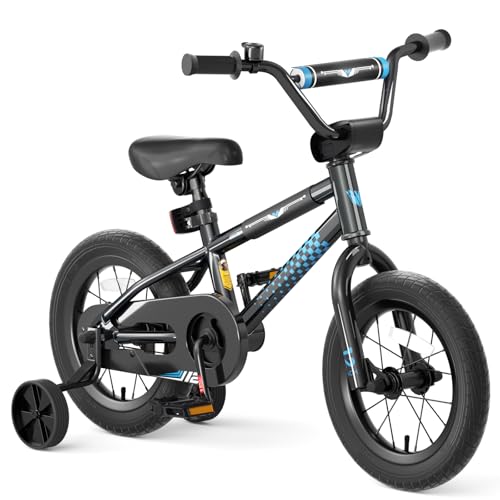
67i’s BMX-style bike provides a safe progression for young riders with removable training wheels, a durable steel frame, and an adjustable seat. The bike supports a three-stage learning path: start with balance and stability with training wheels, then transition to pedal power as confidence grows. The range of wheel sizes (12/14/16 inches) accommodates growing children, making it a versatile option for early riders.
Buying Guide
Key purchase considerations focus on balance versus traditional learning bikes, rider height, age, and growth expectations. Balance bikes (no pedals) encourage early balance and steering skills, typically suited for ages 18 months to several years. For older children, bikes with removable training wheels offer a gentle progression toward pedal power without abrupt changes. When evaluating options, check:
- Size range and adjustability: seat height, handlebar height, and wheel size should accommodate growth.
- Braking system: coaster brakes are common on beginner bikes; hand brakes may be introduced with rider confidence.
- Weight and frame material: lighter bikes are easier to handle for beginners; sturdy frames improve durability.
- Safety features: chain guards, reflectors, bells, and stable wheelbases reduce risk during learning.
- Transition plan: define a gradual move from training wheels to no training wheels or pedal power.
When choosing, consider the child’s current balance and riding experience, space for practice, and whether the bike aligns with a gradual, safety-first progression. For families seeking a long-lived option, a bike that grows with the child and offers a clear path from balance or training wheels to independent riding can provide the best value and a smoother learning curve.