Answering riders’ search intent: these bike navigation computers help you follow routes accurately, track stats in real time, and stay on course on any ride. The top picks here are best for different needs—outdoor enthusiasts seeking rugged, waterproof devices; cyclists who value smartphone integration; and riders who want quick route sending from apps like Strava or Komoot. This guide compares five models, highlighting who they’re best for and why. A compact buying table summarizes key points to help you decide fast.
| Product | Best For | Key Benefit | Limit/Note |
|---|---|---|---|
| iGPSPORT BSC500 | All-weather riders | Large 3.3″ touchscreen with MAP navigation | Requires app routing |
| iGPSPORT BSC200S | Street-to-trail commuters | Wireless route navigation; IPX7 waterproof | Smaller screen |
| GEOID CC700 Pro | Colorful maps lovers | 4GB offline maps; re-route planning | 2.8″ screen |
| GEOID CC600 | Data-focused riders | WiFi & Bluetooth sync; 100 hours storage | Smaller display |
| COOSPO CS600 | Value with good features | Backlit 2.4″ touchscreen; long battery life | GPS accuracy relies on signals |
iGPSPORT BSC500 GPS Bike Computer

The BSC500 features a 3.3″ touchscreen for easy operation, supporting both touch and button controls. It can display up to 12 cycling data pages for quick access during rides. Best for riders who want clear visibility and simple navigation on a larger screen. It also uses dual-band satellite positioning (GPS, Beidou, GLONASS, Galileo, QZSS) across L1 and L5 to improve accuracy and reduce interference, making it suitable for varied terrains and urban canyons. Routes can be created in the iGPSPORT app and imported from Strava or Komoot. Caution: larger screens can draw more battery life on long tours.
Who it’s best for: Riders who prefer a big display and robust offline routing via app integration. Ideal for cyclists who ride in challenging environments where reliable positioning matters.
iGPSPORT BSC200S GPS Bike Computer
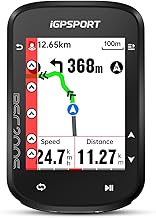
The BSC200S emphasizes wireless route navigation and convenience with a 2.4″ display. It supports route creation in the official iGPSPORT app and can import routes from Strava, ride with GPS, or Komoot. The one-touch navigation feature lets users quickly send a route to the device and start riding. It also includes turn reminders and incoming notifications. Best for riders who want quick route setup on the go and effortless transfer of routes from popular apps. Limitation: smaller screen may reduce data readability at a glance during fast sections.
Who it’s best for: Commuters and enthusiasts who value fast setup and seamless app-to-device routing, plus handy alerts on the ride.
GEOID CC700 Pro 2.8″ Color Touchscreen

The CC700 Pro uses a 2.8″ color touchscreen with three-button support for quick control. It includes offline maps with 4GB storage and color-coded navigation with turn prompts and dual-perspective views. Re-routing is available if connected to the app, ensuring you stay on track. Best for riders who prefer vivid maps and reliable off-route recalculation. Caution: the 2.8″ screen is smaller than higher-end models, which can affect map readability on busy roads.
Who it’s best for: Riders who want bright, color maps and robust offline navigation with easy re-routing when needed.
GEOID CC600 Color Screen Bike Computer

The CC600 offers a 2.4” color display with a durable build and intuitive controls. It ships with WiFi and Bluetooth for rapid data transfer and firmware updates, plus automatic sync of AGNSS and ride records. With up to 100 hours of data storage, this model is strong for riders who log many miles between syncs. Re-routing uses external GPX uploads via the phone app, helping riders stay on course. Best for data-heavy riders who plan long multi-day trips. Limitation: smaller screen size can make fine details harder to read at a glance.
Who it’s best for: Long-distance riders who want ample memory and fast wireless updates, with easy route sharing and re-routing.
COOSPO CS600 Color Touchscreen GPS Bike Computer

The CS600 features a 2.4″ high-resolution color touchscreen with auto-backlight for visibility in changing light. It uses GPS and GLONASS for accurate tracking of speed, distance, time, and routes. Built-in route navigation lets users upload routes or follow breadcrumb trails. This model suits riders who want clear mapping and dependable day-to-day navigation with strong visibility. Caution: battery life can vary with backlight usage and GPS activity.
Who it’s best for: Budget-conscious riders who still want reliable navigation, smart screen behavior, and solid GPS performance.
Buying Guide
What to consider when choosing a bike navigation computer:
- Display size and readability: larger screens improve map viewing but may affect device size and battery life.
- Navigation features: look for route import from Strava/Komoot, re-routing, and offline map options if you ride in areas with poor signal.
- Connectivity: Bluetooth, ANT+ and WiFi enable data transfer, firmware updates, and app integration.
- GPS accuracy: multi-satellite support (GPS, GLONASS, Galileo, Beidou, QZSS) reduces drift in challenging environments.
- Durability and waterproofing: IP ratings and rugged builds help for rain, sweat, and mud.
- Battery life and storage: longer rides benefit from higher capacity and more stored routes.
- Apps and ecosystem: compatibility with popular route services (Strava, Komoot, Ride with GPS) adds flexibility.
FAQ
- What is the advantage of offline maps on a bike computer?
– Offline maps allow navigation without cellular service, useful in remote areas. - Can I import routes from Strava or Komoot?
– Yes, several models support import from Strava, Komoot, and other apps either directly or via the companion app. - Is a touchscreen essential for cycling navigation?
– Not mandatory; some devices rely on physical buttons for glove-friendly operation, but touchscreens offer quicker interactions. - Does GPS accuracy vary by device?
– It can vary; devices using multiple satellite systems generally provide steadier positioning in urban canyons or forests. - Are these devices weather resistant?
– Many models offer IPX7 or similar ratings, protecting against rain and splashes during rides. - Which device is best for long-distance cyclists?
– Models with larger storage, longer battery life, and robust route options are ideal for long trips.