Finding the right insulated bag or backpack can boost delivery efficiency, keep food at the right temperature, and protect gear during daily rides. This guide compares top options designed for bikes, e-bikes, and scooters, highlighting capacity, insulation, durability, and ease of use. Each pick is evaluated for safety, weather resistance, and practical features to help drivers maintain quality from restaurant to customer.
The following table summarizes five standout products chosen for American riders seeking reliable temperature control, convenience, and durability on busy delivery routes.
| Product | Brand | Capacity | Key Benefit |
|---|---|---|---|
| Insulated Food Delivery Bag | Nesthao | 62 L | Magnetic top, rugged exterior, rigid support |
| Ytonet Food Delivery Backpack | Ytonet | Expandable (fits 6×14″ pizzas + beverages) | Expandable layer, internal supports, organized compartments |
| SA&MC Pizza Delivery Bag Bundle | SA&MC | 62 L | Rear plastic rack compatibility for bikes and motors |
| GoHimal Food Delivery Backpack | GoHimal | Large capacity (expands) | Leak-proof liner, multi-pocket design, comfortable wear |
| MEODOASSY Extral Large Backpack | MEODOASSY | 3.7″ & 2.75″ expandable layers | High capacity with two-layer expansion and stability |
Insulated Food Delivery Bag for E-bikes/Scooters

The Nesthao insulated bag combines a rugged 500D tarpaulin exterior with a PE foam insulation layer and reflective inner lining to minimize radiant heat loss. A magnetic top cover allows quick access for frequent deliveries, reducing wear on zippers and Velcro. The fiberglass frame provides structural support, preventing sagging and safeguarding the contents during transit. This 62-liter bag is designed to fit larger items, including multiple pizzas, and withstand rainy commutes.
Ytonet Food Delivery Backpack

Ytonet offers a high-capacity insulated backpack with a 4-inch expandable layer and a top compartment, enabling riders to carry up to six 14-inch pizzas plus beverages. The 600D Oxford exterior, aluminum-foil interior, and foam insulation keep food hot or cold for extended periods. A rigid internal support system maintains structure during rides, while a detachable cola organizer helps prevent spills. It emphasizes balance between capacity, temperature control, and stability for busy shifts.
SA&MC Pizza Delivery Bag Bundle

This bundle includes a large 62-liter delivery bag paired with a rear plastic rack, designed for motorcycles, e-bikes, and bikes. The rack supports a maximum bag size for secure mounting and stable transport of multiple orders. It is tailored for drivers who frequently pick up pizza orders and multiple items, providing a sturdy base to prevent bag collapse during movement.
GoHimal Food Delivery Backpack

GoHimal’s delivery backpack emphasizes comfort and capacity with padded back and straps, plus multiple pockets and reflective trim for visibility. The insulation system includes a leak-proof liner and a spacious interior designed to maintain hot or cold temperatures for several hours. An upgraded design focuses on easier loading and unloading, making it suitable for longer shifts and varied menu items.
MEODOASSY Extral Large Delivery Backpack
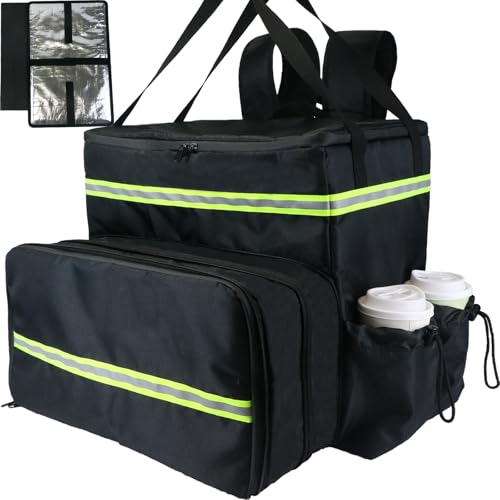
MEODOASSY crafts an extra-large, two-layer expandable backpack that accommodates multiple pizza boxes and beverages. The 3.7-inch and 2.75-inch expansion sections increase capacity while the aluminum foil lining and foam insulation help keep items hot or cold. Waterproof zippers and a sturdy fabric exterior guard against rain and wear, while internal support plates prevent bag collapse during transit.
Buying Guide: Key Purchase Considerations
- Capacity and expansion: If you mostly deliver pizzas, prefer bags with expandable compartments and space for beverages. For multiple orders, choose higher-capacity backpacks with multiple pockets and internal dividers.
- Insulation and temperature control: Look for triple-layer insulation, aluminum foil lining, and leak-proof interiors to minimize heat loss and protect food integrity across shifts.
- Durability and weather resistance: Durable exterior materials (e.g., 500D tarpaulin or heavy-duty fabric) and waterproof zippers prevent damage from rain and road wear.
- Structural support: Rigid frames, bottom inserts, or internal supports help bags retain shape, reduce content movement, and protect pizzas and beverages during delivery.
- Ease of access and setup: Magnetic closures, wide tops, and quick-release racks minimize time spent loading and unloading, improving efficiency during peak periods.
- Comfort and safety: Padded straps, back support, reflective strips, and proper weight distribution reduce fatigue and improve visibility for night deliveries.
- Compatibility: Ensure rear racks or mounting systems fit your bike, scooter, or motorcycle, and verify compatibility with your typical orders (size and quantity).
- Maintenance: Materials that are easy to clean and resistant to leaks help maintain hygiene, especially with beverages and sauces.
- Warranty and replacement parts: Consider bags with solid customer support and readily available spare parts or replacement components.
Choosing the right bike delivery bag involves balancing capacity, insulation, durability, and comfort. By examining the latest options designed for urban delivery, drivers can maintain food quality, maximize daily deliveries, and reduce wear on gear across diverse weather conditions and routes.